Get Full Government Meeting Transcripts, Videos, & Alerts Forever!
Get email alerts on the Signs topic
No spam. Unsubscribe anytime.
Narrows planning commission reviews rewrite of sign ordinance, refers draft to council for March 9 public hearing
Summary
The Narrows Planning Commission reviewed a draft rewrite of the town sign ordinance—covering definitions, temporary/permanent categories, vision‑triangle setbacks, height limits and grandfathering—and agreed to send the draft to the Town Council for a public hearing on March 9 at 6 p.m.
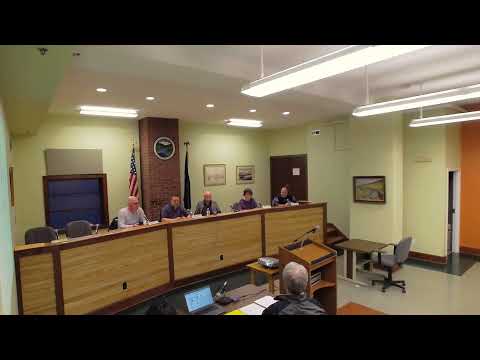
The Narrows Planning Commission on March 3 reviewed a substantially rewritten sign ordinance and agreed to send the draft to the Town Council for a public hearing at the council's March 9 meeting at 6:00 p.m.
The commission’s staff presenter, identified in the transcript as Afi, told members she had incorporated changes the commission previously requested and would make minor grammatical edits before the draft goes to council. Commissioners focused on several substantive items: the definition and prohibition of so‑called "snipe" signs (temporary signs attached to poles or trees), numeric setbacks for vision triangles at intersections, different height rules for downtown versus highway corridors, and how to treat existing nonconforming and electronic signs.
Commissioners agreed to avoid content‑based categories in the ordinance—such as singling out "yard sale" or "political" signs—because of recent U.S. Supreme Court decisions on sign content. "The Supreme Court has ruled that you can't control content of a sign," one commissioner said, and the draft therefore replaces category‑based rules with a simpler classification of temporary versus permanent signs and size limits to remain on firmer constitutional ground.
On height and location, staff described a table in the draft that splits the B‑2 business district into two areas: the downtown/Main Street area with lower height and size limits, and the parcels adjacent to US‑460 where larger, taller signs would be permitted. In other areas outside the highway corridor the draft would cap certain signs at a 50‑foot maximum; by contrast, the draft limits freestanding signs for nonresidential uses in residential zones to 6 feet and calls for monument‑style signs (ground‑mounted and framed) rather than pole signs.
Commissioners also asked for clearer language and a possible diagram defining the "vision triangle" at intersections so that the ordinance specifies a measurable setback (members discussed figures such as 20–25 feet) and avoids obscuring drivers’ sight lines. The draft will be adjusted to put that definition into the ordinance's definitions section or to include an illustrative diagram.
Existing signs approved under prior special exceptions would be grandfathered, members confirmed, even where the current zoning text would not permit electronic or pole signs. Staff described the enforcement approach: owners will be notified and given a period (the draft and staff comments discussed a 30‑day cure period) to remove or correct illegal signs, after which the town may remove the sign and charge the owner; penalties for repeat violations were characterized as progressive, generally starting as misdemeanors for first offenses.
A local church's request to install a sign prompted discussion about timing: staff said the church was told it must wait until the ordinance change is in effect; commissioners noted that if workarounds (temporary tarps, minor repairs) skirt the rules the town's enforcement remedies would be the next recourse.
Staff said the draft will be transmitted to the Town Council and placed on the council agenda for March 9 at 6:00 p.m., and commissioners were asked to attend so the commission can provide a recommendation if a quorum is present at that hearing. The commission also discussed training and longer‑range zoning topics: a regional planning training on April 22 and future consideration of data centers and solar farms as part of zoning updates.
The meeting closed after a motion to adjourn was made and seconded; no final policy action on the ordinance occurred at this meeting—the commission's role at this stage is to review and refer the draft to council.