Get Full Government Meeting Transcripts, Videos, & Alerts Forever!
Get email alerts on the Board Governance topic
No spam. Unsubscribe anytime.
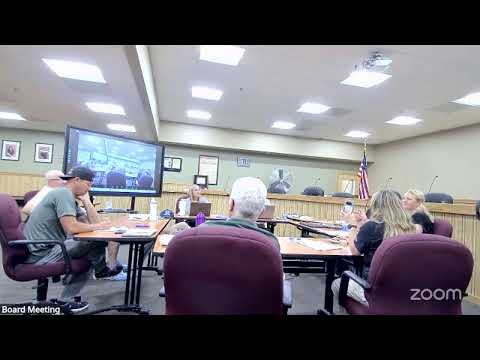
Board workshop reviews OSBA model policies, legal access and complaint procedures
Summary
At a special governance workshop the board and facilitator reviewed OSBA-suggested updates to board governance policies: requests for records, when the chair may seek legal advice, complaint-handling, public meetings/ethics, and limits on serial communications. Trustees asked staff to bring back redlined policy language for first reading.
Trustees spent substantial time reviewing model board-governance language and discussing how to revise local policy to improve transparency and reduce legal risk. Facilitator Christy guided the board through practical changes around records requests, access to legal counsel, the complaint process and public meetings law.
On records, the facilitator recommended that materials generated in response to a board member's request be shared with the full board to avoid serial, ad-hoc information requests that can create perception problems. "If somebody asked for something, it's made available to the whole board," she said, arguing for a transparent threshold for high-cost requests that require a board decision.
Trustees discussed when the board chair should be authorized to obtain legal advice between meetings. The OSBA draft allows the chair to seek counsel if "advantageous" before the next meeting; several trustees said the district needs clearer limits so the chair cannot expand the scope of an investigation without board authorization. The facilitator advised using attorney-client privilege carefully and having attorneys communicate directly with the full board in privilege-sensitive matters.
On complaints and public comment the group discussed focusing board time on complaints the board is legally required to hear and routing other concerns through the superintendent and complaint-policy process. The facilitator suggested practical measures — a greeter system and cabinet follow-up — so people who come to public comment feel heard and see follow-up, while the board preserves governance boundaries.
Christy reviewed public-meetings rules and the ethics consequences of serial communications outside public sessions, reminding trustees that even conversational outreach can become deliberation if it precedes a board decision. She recommended training and clarified that routine informational messages are permitted but any deliberative exchange on an upcoming decision belongs in a public forum.
The facilitator offered to redraft the most relevant policies into the familiar packet format (strike-through/underline) and to return them for a first-reading at a future meeting. Trustees agreed to have Melissa and the district secretary produce redlines and to consider a short working-agreement one-pager the board can use as an easily accessible reference.