Get Full Government Meeting Transcripts, Videos, & Alerts Forever!
Get email alerts on the Land Development topic
No spam. Unsubscribe anytime.
Developers present 192‑acre mixed‑use concept for south Nixa with adventure‑park anchor
Summary
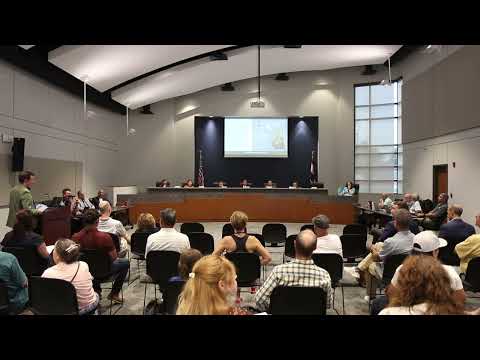
At the July 14 Nixa City Council meeting a development team led by Brad King unveiled a 192‑acre mixed‑use master plan that emphasizes walkability and includes a proposed indoor‑outdoor 'adventure park' anchor; the team outlined major infrastructure needs and four public‑finance tools it may seek to employ.
Brad King, representing the development group for the proposed Nixa Land Holdings project, presented a conceptual master plan for roughly 192 acres south of U.S. 160 at the council's July 14 meeting. The plan, the team said, would combine residential neighborhoods, local walkable retail, regional commercial and a mixed‑use town center anchored by an indoor‑outdoor 'adventure park.'
The development team emphasized walkability as a design principle. Scott Layton of the land‑planning firm said the plan organizes activity around a '5‑minute walk' radius so residents can reach daily needs on foot, and he described a network of pedestrian‑only thoroughfares, sidewalks on every street, parks and stormwater features that double as public amenities. Layton said about 14% of the site is currently shown for commercial use, with higher‑intensity uses concentrated at a primary intersection to support retail and a possible grocery store.
Kirk Peterson, speaking for the development team, said the southernmost 29 acres would host the adventure‑park anchor with activities such as zip lines, pump tracks and climbing elements intended to attract families and regional visitors. Peterson also outlined the scale of infrastructure needed to make the project feasible: 'Everything you see within the red hash boundaries, about $400 in taxes per year,' he said, adding that off‑site improvements at Highway 160 could run roughly $5 million at the low end and up to $10 million if widening and additional work are required. Peterson estimated about $33 million in on‑site public infrastructure would be needed for streets, sanitary and stormwater systems.
Because the parcel is unimproved and includes geologic constraints such as sinkholes and erosion, the team said the project would be phased and would likely require a public‑private financing structure. Peterson listed four tools the team would consider: tax‑increment financing (TIF), a community improvement district (CID), a transportation development district (TDD) and Chapter 100 property‑tax exemptions on construction materials. He emphasized that, in the team's view, revenues and risk would stay with the developer without proposing TIF bond guarantees.
Members of the public and local economic development stakeholders spoke in favor of the concept during the visitor section. Kristen Hazeltine, president and CEO of the Christian County Business Development Corporation, praised the team's neighborhood‑oriented approach and said the package included sinkhole, traffic and retail market studies. Whitney Gison, president of the local chamber, told council she was "stoked" about the project's potential for commercial growth.
Next steps, as the team described them, include further technical studies, outreach to potential tenants and follow‑up discussions with the council about whether to pursue any public‑finance agreements or development agreements that would set responsibilities for public improvements.