Get Full Government Meeting Transcripts, Videos, & Alerts Forever!
Get email alerts on the Sanitation topic
No spam. Unsubscribe anytime.
Montreat commissioners weigh contracting sanitation service and convenience-center upgrades to cut costs
Summary
At its first budget workshop, Montreat commissioners reviewed three sanitation options — continue current service, buy an in-house compactor truck, or contract collection while upgrading the convenience center — and staff recommended trying contracted service with facility upgrades as the lowest-cost near-term option.
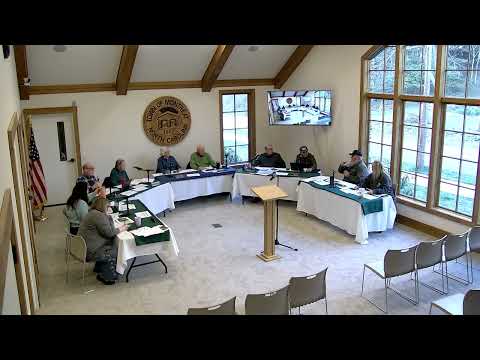
Montreat commissioners met in a budget workshop to review sanitation service options for the town’s service area (referred to in materials as “2627”). Savannah (Speaker 2), who led the session, said staff had prepared a three-year outlook and wanted commissioners to begin evaluating costs and operational trade-offs.
"So, our main purpose today is to talk about sanitation service options for 2627," Savannah said, opening the presentation of three scenarios: (1) keep the current approach, (2) maintain services in-house but purchase a compactor truck, or (3) contract sanitation collection while upgrading the convenience center.
Staff presented a contractor quote of about $237,570 for the contracted-with-upgrades scenario. That proposal would keep 20% of Drew’s sanitation FTE on the department’s payroll, add a concrete pad and sidewalk at the convenience center, install compactor-style dumpsters and keyless entry, and upgrade signage and gates to restrict access to residents.
Savannah and Barry (Speaker 8), who described operational details, said the contracted option would reduce staff workload and allow the public-works team to shift to oversight and gap-filling rather than daily collection. Barry said consolidating containers and installing compactors could reduce haul frequency and lower per-ton costs: "Not sustainable," he said of the current double-handling and staffing strain, arguing a change was needed.
Staff explained the recent cost increases are driven largely by frequent container switch-outs and monthly rental fees at the convenience center rather than solely by vendor price increases. One staff analyst said bulky items and frequent full containers require more hauls, which has driven up dumpster rental and haul charges.
Commissioners and staff discussed enforcement and access controls to prevent nonresidents from using the convenience center. Justin (Speaker 10), describing camera and license-plate capabilities, said a single camera with license-plate capture could be cost-recovered through one or a few citations: "With that one camera ... with one citation, you would basically fund that camera," he said. Commissioners discussed fines ($500–$1,000 were cited in discussion) and keyless-entry systems to limit use to authorized residents.
Staff noted procurement requirements: the contractor quote is an initial estimate and the town would need to issue a request for proposals and select the lowest responsible bidder. Staff also said the vendor under consideration (CWS, cited in the discussion) had provided three years of pricing and that other municipalities reported satisfactory service.
The board reviewed an in-house compactor-truck option that would avoid contracting but carry larger up-front capital costs. Staff estimated purchasing a compactor truck at roughly $397,000 in fiscal year 2026–27 and flagged additional site needs (overnight parking with containment for possible leaks) and higher ongoing maintenance demand for such vehicles.
Commissioners weighed trade-offs: contracted service with convenience-center upgrades appeared to be the lowest near-term cost and would free staff time; the compactor-truck option would preserve town control but require significant capital and maintenance. Several commissioners supported trying the contracted option on a one-year trial while completing the center upgrades that would be needed in any scenario.
Savannah closed the workshop without a formal decision and asked staff to return with a recommended budget by early May. No votes or binding actions were taken at the session.