Get Full Government Meeting Transcripts, Videos, & Alerts Forever!
Get email alerts on the Meeting Management topic
No spam. Unsubscribe anytime.
San Luis Obispo council to pilot new meeting order Aug. 4; staff to publish agenda responses earlier
Summary
At a July 13 brown-bag workshop, the San Luis Obispo City Council agreed to pilot a new meeting sequence — staff presentation, then public comment, then council questions and deliberation — starting Aug. 4, and directed staff to post council questions and responses on the agenda by 1 p.m. on meeting day.
At a July 13 brown-bag workshop on meeting management, the San Luis Obispo City Council agreed to pilot a new agenda order starting Aug. 4 that will place staff presentations first, allow public comment on each item immediately afterward, and then move into council questions and deliberation.
Mayor (speaker S2) summarized the plan and asked the council to try the pilot: "So what I heard at this point is we are starting the 4th," the mayor said, asking staff to make script and agenda changes and to evaluate results after the trial period. Staff said the change can be implemented without immediate amendments to council procedures, but a permanent change would require updating policies if the council chooses to codify it.
The pilot responds to repeated concerns that lengthy meeting schedules — sometimes running past 11 p.m. — reduce the quality of deliberation and lose public attendance. Several council members urged structuring early meeting business so members of the public can comment on time-sensitive public-hearing and business items before lengthy consent or late-night items push them out.
Staff described operational steps to support the pilot. A staff member (S4) said staff reports will continue to be posted seven days before meetings and that staff will publish council questions and staff responses on the agenda by 1:00 p.m. on meeting day so the public has clearer information in advance. "Staff agenda questions and staff's response will be published by 01:00 the day of the meeting on the agenda," the staff member said.
Council members debated other tactics for shortening meetings while preserving public access. Options discussed included limiting the amount of time council members have to speak on items, using “hot links” and concise presentations supported by detailed staff reports, piloting moving pulled consent items to the end of the meeting, and scheduling a check-in (around 9:30 p.m.) to decide whether to extend beyond a set hour.
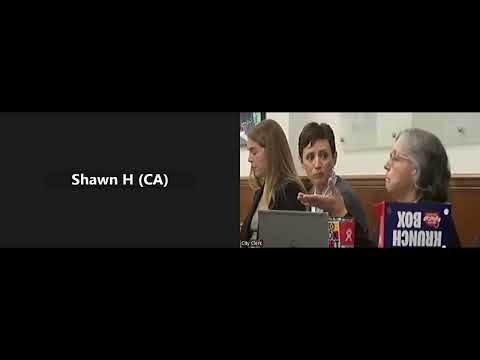
Public comment at the workshop included a three-minute statement from Sean Harris (S6), who urged the council to consider rules about censoring members amid ongoing legal disputes involving the mayor and city manager. "I thought censorship might be a good topic to bring into your discussion today," Harris said; councilmembers did not take immediate action on that suggestion during the workshop.
The clerk and staff also described several changes to make public participation clearer for hybrid audiences: new speaker cards that allow requesters to choose 1-, 2- or 3-minute slots; a visible online timer for remote speakers; and procedures for handling disruptive participants on Zoom. Staff said the clerk's office will follow a disruption-handling script that includes removing repeat disruptors from the meeting platform. City counsel staff said they will circulate a confidential memo explaining how the rules balance First Amendment concerns and the Brown Act.
No formal ordinance or vote was taken at the workshop; council members generally agreed to test the pilot starting Aug. 4 and to return for follow-up discussion after the trial. The mayor closed the session by directing staff to update scripts and agenda materials and to report back with results from the pilot.