Get Full Government Meeting Transcripts, Videos, & Alerts Forever!
Get email alerts on the State Budget topic
No spam. Unsubscribe anytime.
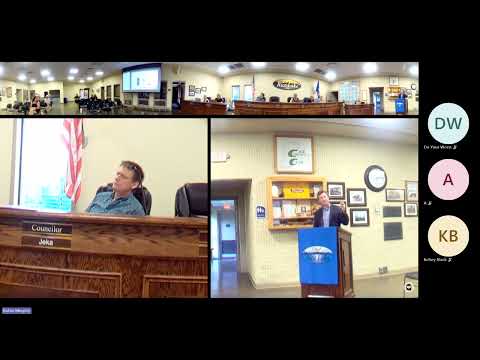
Coalition of Greater Minnesota Cities briefs Rice Lake on bonding, lead-service lines and housing policy
Summary
Darren Lee of the Coalition of Greater Minnesota Cities told the Rice Lake council the recent session produced a $1.24 billion bonding package with more than $400 million for water and wastewater, but only $15 million for lead-service-line replacement this year — leaving cities to press for additional funding. He also outlined housing preemption proposals and upcoming coalition events.
Darren Lee, representing the Coalition of Greater Minnesota Cities, gave Rice Lake officials a summer briefing on the recent state legislative session and what it means for small cities. Lee said the session yielded a large bonding bill for public projects but left gaps for other priorities the coalition has pressed for.
"We got 1,240,000,000, and over 400,000,000 for water and wastewater," Lee said, summarizing the final bonding result and its mix of statewide and locally targeted projects. "That was a pretty good bill all in all, I think." He said the governor's original proposal funded state-owned assets but did not set aside enough for local roads and bridges; the final bill included additional earmarks for local projects.
Lee flagged lead-service-line removal as an urgent, underfunded need. He said federal and state funding started flowing in 2023 but this year's appropriation — roughly $15 million — will not be sufficient for the 2027 construction season and that coalition members will push for a dedicated funding source next year.
On housing policy, Lee said several bills resurfaced in different forms: proposals aimed at increasing housing supply for smaller communities (previously dubbed "missing middle" bills, now labeled the "starter home act") and measures that could preempt local zoning for certain standards. He said some preemption provisions did not pass but warned advocates will return to the issue next year.
Lee distributed a session summary and a housing report and invited council members to Coalition events later this summer. He closed by answering council questions about local government aid (LGA) forecasts and said future budget outlooks — with new forecasts expected in November and February — will determine whether LGA cuts return as a topic of debate.
The presentation was informational; the council did not take action on any state-level items but received the materials for follow-up and contact information for the coalition.