Get Full Government Meeting Transcripts, Videos, & Alerts Forever!
Get email alerts on the Multilingual Education topic
No spam. Unsubscribe anytime.
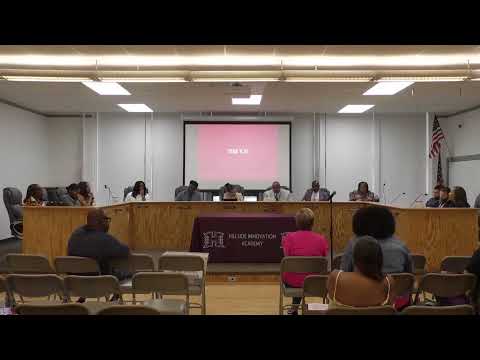
Hillside Public School District reports gains for multilingual learners, outlines monitoring and staffing plans
Summary
At a Board of Education meeting, Dr. Perez presented WIDA ACCESS results showing increases into level 4 for many students, described monitoring and exit procedures, and outlined staffing and professional-development steps including SEI training and a planned hire to fill a secondary ESL vacancy.
Dr. Perez reported to the Hillside Public School District Board of Education that cohort tracking of multilingual learners shows movement into higher WIDA ACCESS proficiency bands, with the district seeing growth into level 4 this past year. She told the board that ‘‘2022, 2023, we were at 13%. And this year, this past school year, we had 27 percent of our students moving ... into level 4.’’
The presentation explained the six WIDA levels and emphasized that level 3 is a key ‘‘developing’’ stage that allows students to begin participating in general education. Dr. Perez said the district will monitor students who exit bilingual/ESL services for two years to ensure they continue to perform and enter advanced pathways when appropriate. ‘‘4.5 is the proficiency line,’’ she said, describing the district’s threshold for exit and proficiency.
District officials highlighted domain-level trends: listening and reading have shown notable growth, with some students already reaching the highest (level 6) performance in certain grades. Speaking and writing lagged relative to reading and listening; Dr. Perez suggested affective factors (for example, students self-conscious about accents) may depress speaking scores and said writing requires integrated skills the district will target with professional development.
On staffing, Dr. Perez said the district operates three bilingual classes at AP Morris (pre‑K, kindergarten and 1st grade) and reported eight elementary ESL teachers and six secondary ESL teachers, with one secondary position currently vacant and expected to be filled by September. She said about 100 teachers received training in Sheltered English Instruction (SEI) this year to help mainstream teachers use strategies that support multilingual students.
Responding to board questions and public comments, Dr. Perez said some year-to-year dips—including a small decline observed in grades 11–12—were not large enough to trigger an immediate formal investigation but would be included in deeper data reviews. She closed by saying the district will continue targeted interventions and professional development to address remaining gaps.
Next steps the district identified at the meeting included continued cohort analysis, follow-up on the secondary ESL vacancy, and targeted professional development informed by itemized data reviews. The board applauded the bilingual and ESL department at the close of the presentation.