Get Full Government Meeting Transcripts, Videos, & Alerts Forever!
Get email alerts on the Data Centers topic
No spam. Unsubscribe anytime.
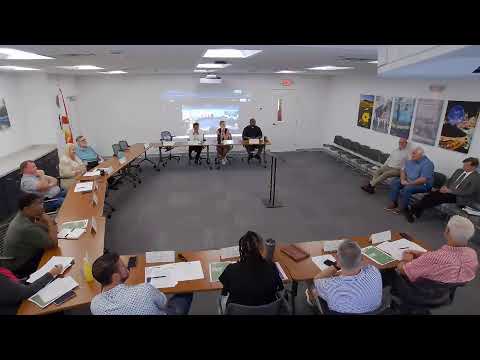
Columbia County advisory board weighs data center policy, eyes site study before July 23 BOCC workshop
Summary
Advisory board members in Columbia County spent their meeting debating the benefits and risks of data-center development — including water use, jobs and tax revenue — and agreed to prepare questions and consider an in-house site inventory ahead of a July 23 Board of County Commissioners workshop; no formal moratorium vote was taken.
The Columbia County advisory board spent most of its meeting discussing whether and how the county should prepare for data‑center development, with members debating economic benefits, environmental impacts and regulatory options and agreeing to gather information ahead of a July 23 Board of County Commissioners special meeting.
The discussion began after staff flagged a BOCC special meeting set for July 23 at 5:30 p.m. that will include data centers on its agenda. Jennifer, who assembled briefing materials for the advisory board, urged members to attend and to identify questions and information the BOCC should have before deciding on any policy changes.
Members disagreed over whether data centers produce lasting local jobs or mainly short‑term construction work. “They are not job building entities,” the chair said, summarizing takeaways from a recent conference in Orlando where panelists described limited long‑term employment after construction and substantial tax and infrastructure impacts during build‑out.
Joey O'Hearn, who presented results from a chamber survey of about 100 respondents, said 38% of respondents were generally opposed to data‑center development, 25% were generally supportive, 18% were neutral and 17% said they needed more information. He said respondents listed investment, an expanded tax base and construction jobs as top potential benefits and water availability, environmental protections and land‑use compatibility as the top concerns.
Staff described a regulatory gap: Columbia County’s current Land Development Regulations do not specifically classify data centers. “There is no zoning regulations for data centers,” a staff member said, adding that the county could update its LDRs, create overlay districts or set spacing and buffering requirements. The staff member warned that state law constrains how restrictive local regulations can be and noted the county’s drought and local water‑resource limits as a major consideration.
Board members also reviewed state rules on large electric loads: recent measures require developers that need more than 50 megawatts to fund generation studies and upgrades, meaning the utility and developer would study and pay for required infrastructure rather than shifting those costs to ratepayers, Jennifer said during the meeting.
Participants sketched two paths forward: (1) a short, temporary moratorium — a pause that several county attorneys have advised other counties use to buy time to study, draft regulations and avoid reactive decisions — or (2) an immediate in‑house study to inventory potential sites inside designated urban development areas (DUDAs), assess proximity to transmission lines and water resources, and produce criteria that could be added to the LDR update. Planning staff recommended starting with an internal site inventory before pursuing more disruptive steps.
No formal moratorium or regulatory vote occurred at the advisory meeting. Instead, members agreed to collect questions and materials and encouraged attendance at the BOCC special meeting on July 23, where more officials and neighboring counties are expected to discuss whether a moratorium or other steps are appropriate. The advisory board also discussed potential planning tools such as overlay districts, PUDs and architectural buffering to make large facilities less visible to nearby residents.
Next steps: staff said it can run a brief in‑house site search for potential Duda parcels and prepare materials for the BOCC workshop. The advisory board will share the packet online and follow up before the county commission’s special meeting.