Get Full Government Meeting Transcripts, Videos, & Alerts Forever!
Get email alerts on the Water Rates And Audit topic
No spam. Unsubscribe anytime.
Board directs staff to draft ordinance after audit flags large water losses and vacant meters
Summary
Following an internal audit showing significant unaccounted-for water and billing irregularities, the Ste. Genevieve City Board directed staff to draft an ordinance clarifying service-line ownership, charging a consistent base fee for active meters, and identifying and capping vacant meters to protect USDA bond covenants and city finances.
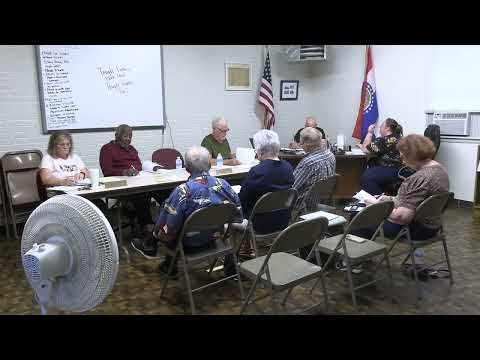
The Ste. Genevieve City Board of Aldermen directed staff to draft an ordinance after hearing results of an internal water audit that identified substantial unaccounted-for water and billing irregularities.
Board members and city staff said the audit showed the city is paying the water district for water that was not being billed accurately to customers, creating a shortfall residents are currently subsidizing. An agency official warned bondholders could require rate increases if the city’s billed meter base falls below the level used to secure existing USDA financing.
The board was told the problem includes vacant or abandoned service connections that remain active, meters that have not been billed a base charge, and historical data‑entry or software errors that inflated annual usage on some accounts. A staff presentation said yard meters were often billed only for gallons used, without a consistent base fee, while the bond model depends on a stable base fee to cover fixed costs.
“To protect the bond, we must clarify ownership and make sure every active meter is accounted for,” an agency official said, urging the board to require a minimum fee for active meters and to adopt demolition procedures so service lines are properly severed when structures are removed.
Board members identified three immediate steps they want reflected in the ordinance: clarify whether ownership of the service line is at the meter or the property line; require a uniform base fee for all active meters so fixed costs are covered regardless of gallons sold; and adopt a demolition/abandonment procedure requiring service lines to be capped back to the main when structures are removed.
Members also directed staff to inventory meters, test suspicious meters and, where necessary, physically locate and cap vacant service lines. One alderman called the problem “a budget killer,” and the board agreed to create a work group and schedule a follow-up work session to draft the ordinance and map a phased implementation plan.
The board did not adopt the ordinance at the meeting; it directed staff to return with proposed language, cost estimates and a timeline for identifying and capping vacant meters, and for standard specifications for future service-line installations.
Next steps: staff will draft ordinance language and present costs and an implementation timeline at a follow‑up work session agreed to by the board.