Get Full Government Meeting Transcripts, Videos, & Alerts Forever!
Get email alerts on the Care Integration Dementia topic
No spam. Unsubscribe anytime.
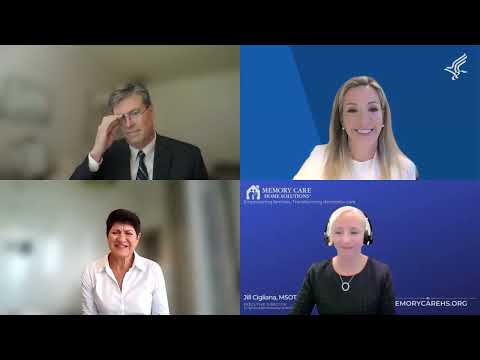
Experts at NADRC webinar urge coordinated health and social care for people living with dementia
Summary
Panelists at a National Alzheimer's and Dementia Resource Center webinar described models and practical steps to integrate health care and community-based social services for people living with dementia, highlighting examples from a Medicare-enrolled nonprofit, a statewide memory network, and the CMS 'GUIDE' demonstration.
Helen Lamont, director of the Division of Disability and Aging Policy, opened the National Alzheimer's and Dementia Resource Center webinar by saying that meeting the long-term care needs of people living with dementia requires better coordination between health care and social services.
Panelists described concrete models and practical steps communities can take to bridge those systems and support both people living with dementia and their caregivers. "In order to truly meet the long term care needs of people living with dementia, services need to be coordinated with their health care," Lamont said, noting ACL has invested millions to improve long-term services and supports.
The webinar featured three practitioners who detailed how integration works in practice. Jill Sigliana, executive director of Memory Care Home Solutions, described turning a nonprofit into a provider that can bill Medicare and contract with Medicare Advantage and commercial plans so families can access clinical services (occupational therapy, care-partner counseling) and social supports (dementia navigation, caregiver groups) from one organization. "A family can come to us, one organization, and access both health care and social supports," Sigliana said, explaining that enrolling as a Medicare provider diversified revenue and made referrals easier for clinicians.
From the health-care side, Dr. Steve Council, professor of medicine at Indiana University School of Medicine, said clinicians need comprehensive cognitive and functional assessments, medication oversight, sensory screening, mobility and falls prevention, and caregiver education. "You really can't provide standard of care for an older adult with geriatric conditions like dementia without paying attention to both their medical and social services," he said, adding that coordination across settings can prevent hospital and emergency department visits.
Becky Kurtz, director of the Area Agency on Aging at the Atlanta Regional Commission, described system-level coordination in Georgia, including the Georgia Memory Net (housed at medical centers such as Grady Hospital) that accepts primary-care referrals for diagnosis and connects families to AAAs and the Alzheimer's Association. Kurtz also cautioned that social services are often grant-funded and limited: "By the way, there are 1,800 people waiting for meals in my region right now," she said, citing a concrete capacity constraint that can frustrate referral efforts.
Panelists named common barriers: lack of EHR access for community-based organizations, differing incentives and timelines across health and social systems, workforce shortages, and unstable grant-based funding. They recommended practical fixes many communities can adopt: designate a named liaison or champion in clinics and AAAs, create a single referral point or an online referral form, include referral prompts in electronic health records, hold regular cross-sector meetings, and invest in training and relationship-building to foster trust.
Several panelists described participation in the CMS Innovation Center's GUIDE demonstration as an important test of payment and care models that pair medical and social supports. "GUIDE is a beginning of that kind of integrated care," Council said; panelists said results from the demonstration will help determine feasible payment approaches.
On outreach, speakers urged multiple modes of access (print, video, telehealth, trusted faith- and community-based partners) so caregivers can be reached "where they are," and recommended meeting people along the caregiving trajectory so services are available when families are ready to use them. Telehealth can extend reach to rural areas but often still requires in-home support to set up equipment, panelists said.
The webinar closed with a note that slides, an issue brief, and the session recording will be distributed to participants and a reminder about a follow-up NADRC webinar on adult day programming. The session was supported by the Administration for Community Living and intended to surface practical models and barriers for communities trying to integrate health and social supports for people living with dementia.