Get Full Government Meeting Transcripts, Videos, & Alerts Forever!
Get email alerts on the Prize Competition topic
No spam. Unsubscribe anytime.
Administration for Community Living details Cultivating Connected Community Prize to expand garden accessibility
Summary
The Administration for Community Living outlined the Cultivating Connected Community Prize, a two‑phase competition awarding up to $12,000 per team across planning and implementation phases to help existing community gardens improve accessibility for older adults and people with disabilities. Phase 1 submissions are due Aug. 26 (11:59 p.m. ET).
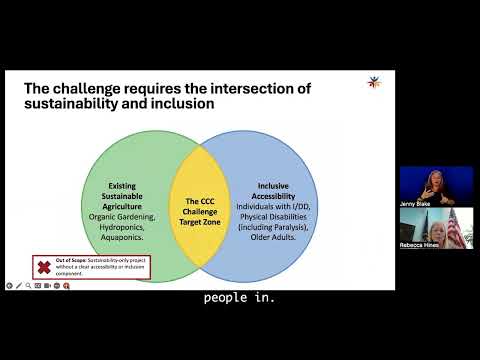
The Administration for Community Living on June 25 described a new prize competition, the Cultivating Connected Community Prize, to help existing sustainable community gardens expand participation by older adults and people with disabilities.
Rebecca Hines, Commissioner of the Administration on Disabilities, said the competition is intended to reduce social isolation and increase “meaningful engagement in our community” by investing in many local projects rather than a few large grants. "We intentionally designed something that would incentivize communities to engage in the kind of work that we support," she said.
The competition uses a two‑phase prize model that, the agency said, rewards demonstrated results rather than funding a project up front. "With prize competitions, it basically flips that grant model on its head," said Jennifer Johnson, Deputy Commissioner for the Administration on Disabilities. In Phase 1 teams submit an accessibility plan; up to 50 teams may receive milestone awards of up to $4,000 and advance to Phase 2. Phase 2 supports implementation and demonstration with awards of up to $8,000; teams can earn up to $12,000 across both phases.
Eligibility and submission rules
Jennifer Johnson explained eligibility and submission requirements. Applicants must be U.S. citizens, lawful permanent residents, or U.S.-incorporated entities; team leads must be 18 or older and citizens or permanent residents. Judges and their immediate family members are excluded from applying. HHS employees acting in a personal capacity are not eligible.
Submissions must be no longer than five pages, with up to five additional pages of appendices (10 pages total), use 8.5-by-11-inch pages with 1-inch margins, and use a minimum 11-point font (9-point allowed in charts). Files must be 508-compliant PDFs or Word documents and written in English. Contact information must be included and applicants should not use government logos. The agency warned noncompliant submissions will be disqualified.
Evaluation criteria and alignment
The agency said judges will score plans using published criteria. The three highest-weighted categories are need and responsiveness, impact and outcomes, and accessibility and community participation (each worth 20 percent, together 60 percent of the score). Other review areas include feasibility and scalability, partnerships and sustainability, environmental stewardship, intergenerational engagement, and data and evaluation plans. Up to 10 bonus points are available for creative outreach and engagement.
Johnson noted the prize aligns with the U.S. Department of Agriculture’s People’s Garden initiative and broader food-systems and community-wellness goals.
Deadlines and next steps
Johnson reiterated key dates: an optional intent to apply is due July 15 by 5:00 p.m. Eastern; Phase 1 submissions are due August 26 at 11:59 p.m. Eastern (a hard deadline with no exceptions); and winners are planned to be announced by October 16. The challenge team requested that applicants use the published submission outline as a template and directed inquiries to cultivatingconnections@acl.hhs.gov. Webinar slides and the submission outline will be posted on the challenge web page.
What to expect from the awards
The prize structure emphasizes community involvement and measurement. Phase 2 requires implementing the Phase 1 plan, involving people with disabilities and older adults in co‑design and governance, collecting participation and outcome data, and presenting results to judges through a virtual demonstration.
The Administration for Community Living encouraged teams to consider how projects will reduce isolation, improve nutrition or chronic‑disease outcomes, and be sustained beyond the competition. The agency said it expects to fund many local projects rather than a single large award.