Get Full Government Meeting Transcripts, Videos, & Alerts Forever!
Get email alerts on the Code Enforcement Vacate topic
No spam. Unsubscribe anytime.
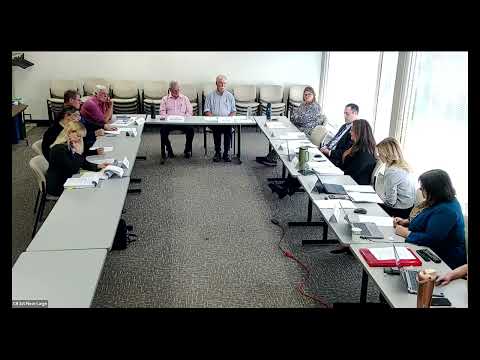
Board upholds notice to vacate for 2371 Unit 15 but denies relocation payments
Summary
The Board of Building Relation Appeals upheld the City of Santa Rosa’s notice in order to vacate for 2371 (transcribed as both Harvey and Corby) Avenue, Unit 15, finding the unit substandard, but voted separately to deny a determination that the displaced tenants are eligible for relocation benefits.
The Board of Building Relation Appeals voted to uphold the City of Santa Rosa’s notice in order to vacate for 2371 (transcribed in the record both as Harvey and Corby) Avenue, Unit 15, but declined to find that the tenants were entitled to relocation payments.
Code Enforcement Officer Jenny Marquez told the board her inspection on Feb. 6, 2026 found Unit 15 to be “substandard” and to present “an immediate threat to life, health, and safety,” citing California Health and Safety Code section 17920.3 and the authority to issue a notice in order to vacate under section 17980.6. Marquez described multiple elevated moisture readings (including repeated 100% readings on bedroom walls and windowsills), visible dark growth she identified visually, live roaches and rodent evidence, an inoperable wall heater with exposed wiring, and a plumbing leak. She recommended the board deny the appeal and uphold the city’s order.
Appellant attorney Michelle Zyrovsky argued the legal question before the board was whether tenants “caused or substantially contributed” to the conditions and therefore whether they were entitled to relocation payments under the Civil Code provisions cited in the appellant’s filings. Zyrovsky told the board the tenant-responsibility provisions cited in the appellant’s brief and rental agreement required a finding that the tenants’ conduct produced the conditions before awarding relocation benefits.
Property owner Jeff Greenberg, appearing virtually, disputed that exterior water intrusion or building failures caused the conditions. Greenberg said he purchased and renovated the complex, described new siding, a new roof and double-pane windows, and said inspectors who reviewed the remediation did not find exterior water intrusion. He told the board the apartment showed high interior humidity, heavy occupancy beyond the lease, blocked airflow from furniture and curtains, accumulated dust and grease, and intermittent tenant maintenance reporting. Greenberg also described steps he said he took after the notice: he reserved and paid for temporary lodging (hotel and Airbnb bookings), offered other units and paid a tenant to relocate temporarily, and said he spent nearly $50,000 on remediation and related costs.
Board members asked both sides about documentation: Marquez said photographic evidence and moisture readings supported the enforcement action; Greenberg said he did not keep a detailed, centralized log for every maintenance visit but that some bookings and payments were documented and that his crew worked on the property frequently. The board legal counsel clarified that the health-and-safety enforcement scheme that authorizes a notice in order to vacate is distinct from civil-law landlord-tenant liability and that a board finding on the notice and a separate finding on relocation eligibility are separable outcomes.
After deliberation, the board voted to uphold the code enforcement division’s notice in order to vacate for Unit 15 and, in a separate action, voted to deny the determination that the displaced tenants are eligible for relocation benefits. The transcript records verbal “ayes” in support of both actions but does not contain a roll-call or recorded numeric vote tally in the public record provided here.
What the board decided matters because a notice in order to vacate removes legal occupancy when a unit is found unsafe; a separate relocation-benefits determination affects whether the city requires the property owner to pay statutorily prescribed relocation assistance. In this case the board upheld the safety-based notice but declined to require the owner to pay relocation benefits.
The transcript also contains inconsistent address wording: staff referred to the building as 2371 Harvey Avenue at one point and later as 2371 Corby Avenue; the record should be read with that discrepancy in mind and the official agenda/packet should be consulted for the correct street name. The board adjourned following the vote.