Get Full Government Meeting Transcripts, Videos, & Alerts Forever!
Get email alerts on the Inclusive Language topic
No spam. Unsubscribe anytime.
Questioner challenges UCSF guide’s use of 'pregnant people'; witness defends inclusive wording
Summary
A brief exchange in a meeting centered on a UC UCSF classroom guide that recommends the term 'pregnant people' instead of 'pregnant women.' One participant asked who would be included by the term; another defended the curriculum as helping students care for diverse patients and said they have 'no problem with using the word pregnant women.'
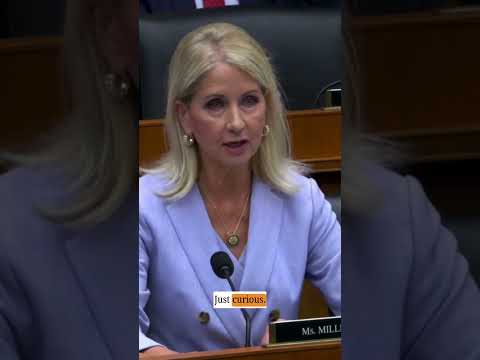
A short exchange in the meeting questioned a UC UCSF classroom guide that recommends using the phrase "pregnant people" rather than "pregnant women." Questioner (S1) read from the guide and asked, "Who are pregnant people compared to pregnant women?" (SEG 001–005).
The respondent, identified in the transcript as Witness (S2), said the guidance is part of a curriculum intended "to help our students, who are facing a wide diversity of patients," and noted that "the vast majority of pregnancies are in women, and I have absolutely no problem with using the word pregnant women. I use it myself" (SEG 008–013). The witness framed the guidance as educational context rather than a prohibition on saying "pregnant women."
Questioner pressed further, asking whether a "non biological woman" had ever had a baby. Witness replied, "A transgender person can" (SEG 014–016). The exchange then included a short, unclear passage in which the transcript records the respondent saying, in sequence, "I I would No" and "Reiterate It's ridiculous," followed by "We take care of transgender" (SEG 019–021). The transcript’s wording in that moment is contradictory and appears garbled; the witness elsewhere affirmed that transgender patients are among those clinicians care for.
The discussion in the transcript centers on wording in an educational guide and the implications for training health‑care students to serve patients of different gender identities. No formal motion or vote appears in the provided segments, and the exchange ends without recorded action to change curriculum language.
The transcript includes direct but brief back-and-forth statements rather than an extended debate; the most concrete claims are that the UC UCSF guide recommends inclusive phrasing and that clinicians treat transgender patients. The transcript does not identify the speakers by name or list any formal decisions about the guide or curriculum.