Get Full Government Meeting Transcripts, Videos, & Alerts Forever!
Get email alerts on the Economic Security topic
No spam. Unsubscribe anytime.
Chair frames "Paxilica" plan as linking economic security to national security
Summary
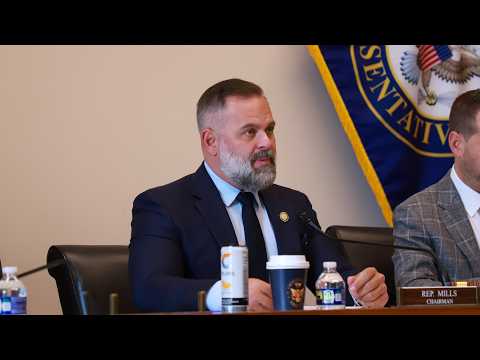
In opening remarks to the House Committee on Foreign Affairs, the chair said economic security '14 from AI and semiconductors to critical minerals '14 is national security and previewed the Trump administration's "Paxilica" initiative and economic security zones, citing a pilot in the Philippines.
At a House Committee on Foreign Affairs hearing, the Chair said the United States must treat economic strength as a national security priority and outlined the Trump administration's "Paxilica" initiative to do that. "Economic security is national security," the Chair said in opening remarks, linking technologies such as artificial intelligence and semiconductors and their underlying critical minerals to long-term geopolitical influence.
The Chair argued that "the nation that controls advanced manufacturing, critical minerals, semiconductors, artificial intelligence, and resilient supply chains will shape the global economy and the balance of power for decades to come." He said the administration is working with "trusted allies and partners to build, secure supply chains, strengthen private-sector investment, and create an economic architecture that advances both American prosperity and American security."
As part of that framework, the Chair described "economic security zones" as allied industrial hubs that operate under "transparent rules, reliable contract enforcement, and high regulatory standards." He pointed to the announcement earlier this year of a first zone in the Philippines as an example of putting the concept into practice and said such zones can reduce dependence on authoritarian regimes that use economic coercion as a geopolitical tool.
The Chair emphasized governance priorities for these partnerships, calling for transparency, accountability and protections for intellectual property. "We must encourage private investment, protect intellectual property, prevent illicit trade, and ensure that partnerships reflect the high standards expected by the United States and our partners," he said.
The opening statement framed the administration's economic agenda as a strategic response to perceived risks from state actors and as a means to anchor future growth "by freedom, security, and American leadership." The Chair concluded by saying he looked forward to hearing from witnesses about the successes of economic security zones and the broader Paxilica initiative.
The hearing proceeded to witness testimony after the opening remarks.