Get email alerts on the Sid Dissolution topic
No spam. Unsubscribe anytime.
State Rep. Steinle outlines legal pathways if Cherokee Village SID dissolves
Summary
State Representative Steinle presented legislative research to the Cherokee Village City Council on July 9 explaining how suburban improvement districts (SIDs) may sell or transfer property, how dissolution works, and how SID ownership can affect grant eligibility and taxation.
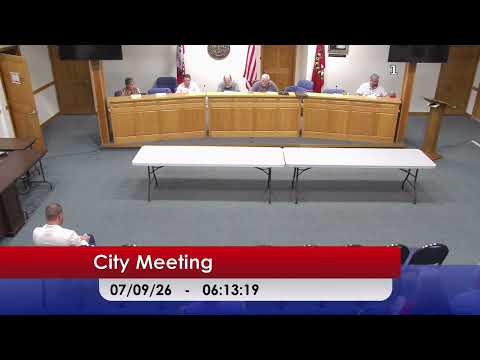
State Representative Steinle told the Cherokee Village City Council on July 9 that state law provides several mechanisms for a suburban improvement district (SID) to sell or transfer property and for the district to be dissolved, and he urged local leaders to consider those statutes carefully before making governance changes.
Steinle, who said he prepared legislative research at the request of constituents, summarized options for land disposition and dissolution and described tax and grant implications. "There is a pathway for the city to take on property if SID becomes no longer viable or the commissioners choose to enter into an agreement with the city," he said, adding that his briefing was factual and not an endorsement of any specific outcome.
Why it matters: property ownership and the legal status of a SID can affect whether a project can apply for certain municipal grants and how remaining district assets are distributed if a SID dissolves. Steinle told residents that a petition process or a unanimous vote of commissioners can trigger major changes to a SID's status, and he offered to meet with citizens and city staff to review the statutes in more detail.
Steinle outlined two common ways a SID can dispose of land: the commissioners may sell district-owned land under terms the board deems appropriate, and landowners may petition the board to sell all or part of the district’s real or personal property if the petition is signed by a majority representing two-thirds of the property value as shown by the latest county assessment. He also explained that upon dissolution, outstanding bonds or indebtedness may require continued assessments until those obligations are paid and that remaining funds may be refunded pro rata to property owners or transferred to a nearby school district under statutory pathways.
The legislator also addressed tax and grant issues. He said Arkansas Code 26-25-102 permits a municipality to levy an ad valorem property tax of up to five mills without voter approval for certain purposes, but he cautioned that grant eligibility can differ between a SID and a city and that some grants available to municipalities may not be available to improvement districts. "In the limited research I've done, it seems to be a fact that they don't [have access to] the same grants," he said, noting that dam reclamation or parks grants could be affected.
During public Q&A, resident Rich Breidenfeld asked whether commissioners could dissolve a SID "at their will" and how property-owner input would be secured. Steinle replied that commissioners are elected by property owners and said citizens should follow up if they suspect statutory violations. Another resident asked whether a transfer to city ownership would make it easier to secure grants for dam work; Steinle said it often affects eligibility and encouraged further review with state offices.
Steinle left copies of his legislative research and offered to meet with local property owners and city officials to answer follow-up questions. Clerk Penny agreed to post copies of the materials on the city's website.
Next steps: Steinle encouraged citizens and council members to review the statutory details and to contact his office for clarifications; council members and residents raised follow-up points about commissioner appointments and procedural compliance for potential future consideration.
AI generated
The text on this page is AI generated. Summaries, highlights, analysis, and video transcripts are all produced from the original source material.
AI can make mistakes, so if you spot one, and we will fix it for everyone.
Note: the source content is unaltered by us. Any content source we link to, be it a video, an audio recording, or a document, is presented exactly as its publisher released it. That publisher is usually a government body, sometimes an individual official or another organisation.