Get Full Government Meeting Transcripts, Videos, & Alerts Forever!
Get email alerts on the Public Finance topic
No spam. Unsubscribe anytime.
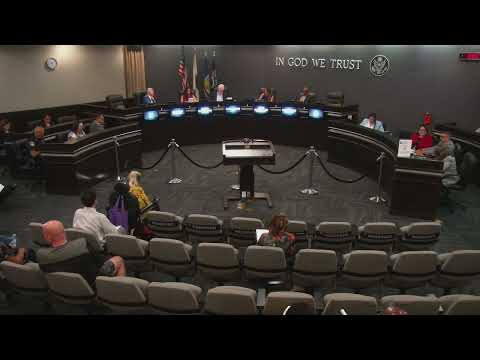
Lancaster delays most proposed assessments and continues sewer hearing to Aug. 11 after public outcry
Summary
After days of public comment and procedural questions about notice and ballot handling, Lancaster’s mayor removed three proposed assessment increases from consideration and the council voted 4–1 to continue the remaining assessment and sewer hearings to Aug. 11 so staff can complete ballot tabulation and address residents’ concerns.
Mayor Paris opened the meeting by telling residents that proposed assessment increases grouped as public hearings 1, 2 and 3 would not be advanced, while other district assessments and a proposed sewer-service charge increase would be continued so ballots could be counted and legal notice requirements met. He said the council would not take final action on the suspended items at this meeting.
City staff and the city attorney explained that staff will begin sorting and opening envelopes on July 15 at 8:30 a.m. and will publicly tabulate ballots on Aug. 11; if a majority protest of parcels in a district exists, the council cannot impose the assessment and the matter ends. If there is not a majority protest of parcels, the council may vote to approve or deny the proposed increase after tabulation. The council adopted resolutions to continue the public hearings to Aug. 11 by a 4–1 vote, with Councilmember Castellanos dissenting.
Residents used the hearing to press several technical and legal objections to the assessment process and the sewer fee proposal. One speaker alleged the city’s mailed correction notices did not reach all affected property owners and raised chain-of-custody concerns about unsecured ballot drop boxes; she urged the city to buy a government-grade ballot box and ensure secure handling. Staff said ballots were sorted and secured nightly in the city clerk’s office and would not be opened until the official count.
Other public speakers questioned the sewer-fee methodology. The city’s consultant, Harrison Associates, described the calculation method used for the proposed Proposition 218 increase: district costs were totaled, then apportioned to parcels using equivalent dwelling units (EDUs) that reflect typical wastewater generation for land-use types. Consultant Chris Thomas said the approach balances cost accuracy and administrative feasibility, because measuring actual wastewater at every parcel for property-tax billing would be prohibitively expensive. Residents contested whether the EDU method satisfied the parcel-specific proportionality required by Prop. 218 and requested parcel-level data, written justifications, and a clearer list of projects and timelines the fees would fund.
Council and staff repeatedly acknowledged the public’s concerns and committed to further outreach and technical briefings. The mayor and city staff proposed a series of follow-up steps: an open workshop with Waste Management to discuss solid-waste rates, additional public materials explaining how to read and track assessments on the property-tax bill, and staff research into possible targeted relief for seniors and income-qualified households. Staff also said it is evaluating neighborhood-stability assistance programs that would use non-assessment revenue to help qualifying owner-occupied households.
What happens next: staff will begin sorting and opening ballots on July 15 with public viewing, continue accepting written protests through Aug. 11, and present the tabulation results and any necessary council action at the Aug. 11 meeting at 1:30 p.m. The council’s continuance preserves residents’ right to protest and buys staff time to complete legally required noticing and counting procedures.