Get Full Government Meeting Transcripts, Videos, & Alerts Forever!
Get email alerts on the Student Discipline topic
No spam. Unsubscribe anytime.
Principals say new cell‑phone policy reduced disruptions; board told consistency of enforcement is the main challenge
Summary
Deming Public Schools principals reported staff survey and referral data showing the district’s secondary cell‑phone policy reduced classroom distractions and social‑media incidents, but administrators told the board inconsistent enforcement across classrooms remains the primary barrier to full effectiveness.
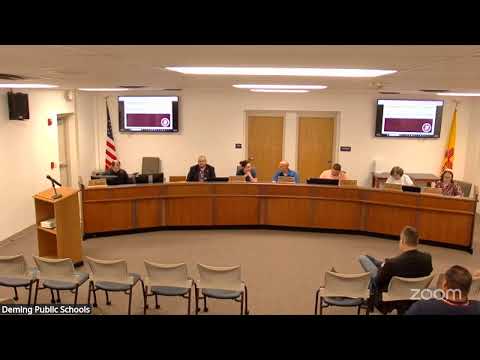
At the July 16 Deming Public Schools board meeting, secondary principals summarized the district’s first full year of implementing a new cell‑phone policy and told board members the policy has reduced in‑class distractions and social‑media incidents.
Gaspar Lozano, principal for Deming Heights, said a year‑end staff survey and behavior data indicate the policy is working but requires consistent enforcement. “We had about 58 staff members respond to the survey. Sixty percent reported that the cell phone procedures were effective, while only 21% viewed them as ineffective,” Lozano said. He told trustees the most frequent issues are inconsistent enforcement across classrooms and unclear expectations for students.
Lozano and other principals presented referral counts to illustrate the change. One presenter reported 433 students reached a first infraction, 158 reached a second (a 36% decrease), and roughly 42 students reached a third infraction; staff said about 64% corrected behavior after the first intervention and 90% never reached a third violation. A principal at Early College High School added that 100% of that campus’s staff found the policy effective and that visible, consistent enforcement was central to student compliance.
Administrators described implementation details the board asked about: first‑infraction devices are held until the end of day, second infractions require parent pickup, third infractions bar in‑school possession and may be treated as insubordination; exceptions are allowed for documented safety needs or 504/IEP accommodations and devices may be stored in school lockers.
Board members pressed staff on recurring issues—students using alternative personal devices (tablets, Bluetooth audio) and the need to ensure teachers uniformly apply the policy. One principal said the district broadened the policy’s definition to cover electronic communication devices and began restricting personal devices during the school day when the problem persisted.
District leaders said the policy rollout included repeated parent and student notifications at pre‑registration, open houses and the first day of class, and that principals will continue efforts to hold teachers accountable for consistent enforcement.
The board took no further action at the meeting; staff said they will continue monitoring referrals and enforcement consistency and report back with any recommended adjustments.