Get Full Government Meeting Transcripts, Videos, & Alerts Forever!
Get email alerts on the Transportation Roundabout topic
No spam. Unsubscribe anytime.
Grass Valley council reverts to signalized design for downtown roundabout after public safety concerns
Summary
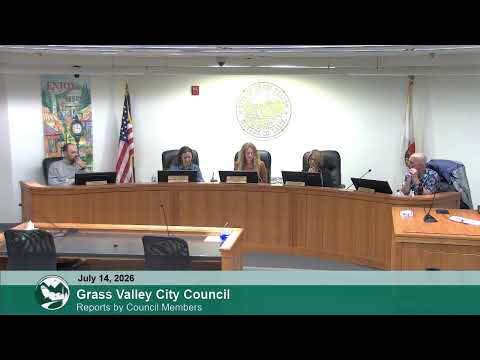
After months of design work and public debate, the Grass Valley City Council voted 4–1 to return the Downtown Roundabout Project to a previously studied signalized alternative, directing staff to file revised environmental documents and identify funding to cover added costs.
A motion to revert the Downtown Grass Valley Roundabout Project to a signalized design carried 4–1 at the council meeting, reversing the previously preferred right‑in/right‑out roundabout layout.
City Engineer Bjorn Jones presented the current oblong roundabout design and explained it was chosen to fit within constrained right‑of‑way, reduce conflict points and construction scope, and remain on schedule to secure Active Transportation Program (ATP) and CMAQ grant funds that together fund $6.8 million of the project. Jones said the current plan is at roughly 30% design and that keeping the current layout helps avoid widening the state highway on‑ramp and expensive retaining walls.
Jones also reviewed the signalized alternative — the prior design the council had considered — and warned that reverting would require roughly $125,000 in additional consultant design work to re‑write technical memos and drawings, and could add an estimated $400,000–$700,000 in construction costs to widen the on‑ramp and install retaining structures. He said missing the ATP funding deadline could jeopardize about $5.4 million of ATP funds unless the city obtains a Commission extension.
Public testimony was divided. Bicycle‑club president Catherine Thompson said the roundabout’s lower vehicle speeds and shorter crosswalks would improve cyclist and pedestrian safety. Multiple business owners, truck operators and nearby residents urged returning to the signalized design, citing truck turning difficulties, event and school‑peak congestion, parking‑lot impacts and evacuation routing. A number of speakers pressed the council to test peak‑hour and emergency scenarios that, they said, were not reflected in the existing simulation.
Council members questioned modeling assumptions — including the timing windows used for peak counts and how school‑release spikes were handled — and heard from Police Chief Alex Gamelgard, who said both designs could work for evacuations but the signalized layout would require less ad‑hoc traffic management on short notice.
A council member moved to direct staff to revert to the signalized design, prepare and file revised CEQA/NEPA documentation, and return with funding options and necessary contract change orders. The motion passed on a 4–1 vote.
Next steps: staff will prepare revised environmental materials, pursue Caltrans and CTC coordination and report back to council with estimated change‑order amounts and funding strategies. The council also asked staff to consider mountable/rolled curbs and to plan for construction‑phase traffic management to minimize downtown impacts.