Get Full Government Meeting Transcripts, Videos, & Alerts Forever!
Get email alerts on the Western Dakota Water topic
No spam. Unsubscribe anytime.
Western Dakota executive requests $100,000 toward feasibility phase for 165-mile pipeline project
Summary
Kristen Konzett, executive director of Western Dakota Regional Water System, briefed the committee on a proposed 165-mile, 72-inch pipeline and requested $100,000 for 2027 to support a federal feasibility/advocacy phase; the committee acknowledged the presentation.
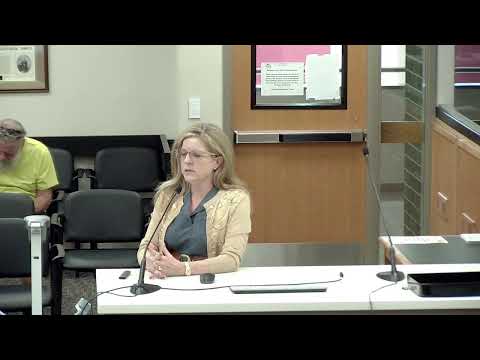
Kristen Konzett, executive director of the Western Dakota Regional Water System, told the Rapid City Public Works Committee on July 14 that the nonprofit is seeking continued local support to complete a feasibility and advocacy phase for a regional water project.
Konzett described the project concept as a 165-mile, 72-inch transmission pipeline drawing Missouri River water, with engineering challenges including a roughly 2,000-foot lift in places. She said the current high-level cost estimate for the full project is roughly $4.5 billion and emphasized the need for federal partnership to move the project forward.
The organization has completed a portion of the work in-house and engaged technical partners: Konzett said the group has completed about 47 percent of its feasibility study internally and has engaged USGS on recharge analyses. She said an act of Congress is needed to authorize a Bureau of Reclamation feasibility study, and that bills have been introduced in both chambers; the group is seeking to advance the measures before congressional recess.
Konzett asked the committee to consider a $100,000 funding request for 2027 to support the feasibility and advocacy period. She outlined a funding strategy that would use previously invested state and member funds as part of the federal match to avoid asking members for large new contributions.
During questions, councilmembers pressed whether local storage or reservoirs remain part of the plan; Konzett said reservoirs and local storage options remain under consideration and that donated land north of Rapid City is being pursued for potential storage. On conservation, she said conservation is one of five pillars of the feasibility study and recommended continuing local conservation efforts in parallel with infrastructure planning.
Councilmember Bill Evans asked whether the project had considered pursuing regional partnerships with neighboring states; Konzett said bylaws currently restrict Western Dakota from operating outside South Dakota, but regional approaches and cooperative options remain under review.
A motion to acknowledge the presentation was moved and seconded and the committee voted to acknowledge the update. Konzett closed by reiterating the timeline for the feasibility and advocacy phase (expected to start 2027) and an aspirational window for construction activity around 2031–2032 if funding and approvals proceed.