Get Full Government Meeting Transcripts, Videos, & Alerts Forever!
Get email alerts on the Land Use Data Centers topic
No spam. Unsubscribe anytime.
Rockaway Township council adopts ordinance banning data centers in all zoning districts
Summary
After extended public comment and council debate, Rockaway Township adopted O26‑23 to prohibit data centers in every zoning district. Supporters cited privacy and community impacts; opponents and some council members raised questions about state law and potential tax revenue. Vote: 7‑2.
Rockaway Township's council voted 7‑2 on July 14 to adopt O26‑23, an ordinance that designates data centers a prohibited use in all township zoning districts.
The ordinance drew an extended public‑comment period and a lengthy council debate. Kathleen Carrozza, a resident who spoke during the public portion, urged the council to approve the ban to prevent data centers from locating in town and argued that resident concerns about local impacts justify the prohibition. “I just wanna speak in favor of stopping data centers from being in Rockaway,” she told the council.
Council discussion highlighted competing priorities. One council member noted recent state legislation—the Data Center Fair Share Act—then signed by the governor and requiring certain on‑site power generation, and said some data‑center projects can produce significant tax revenue and employ modern cooling systems that reduce water use. That council member argued the law and technological changes mean the township could consider limited, site‑specific allowances in the future rather than an absolute prohibition.
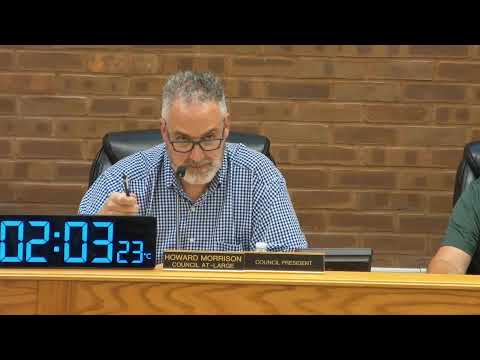
Council President Howard Morrison managed repeated procedural questions about whether the council could withdraw or table the measure for further study. A motion to table the adoption failed, and the council proceeded to a roll‑call vote. The clerk recorded 7 yes votes and 2 no votes, and the ordinance carried.
Supporters framed the measure as protective of neighborhoods and local infrastructure; opponents warned a strict ban could deter large tax‑generating investments or be revisited later if state law or circumstances change. Several residents had urged the council either to adopt the ban as written or to craft a narrowly tailored zoning approach; council members said the ordinance can be revisited in the future if needed.
The ordinance’s adoption was the meeting’s most contested item; the council also introduced and approved other ordinances and resolutions during the session.
The council did not immediately specify an effective implementation timetable at the meeting; any subsequent zoning applications or proposals related to data centers would be handled under the newly adopted code changes unless the council votes to amend the ordinance.