Get Full Government Meeting Transcripts, Videos, & Alerts Forever!
Get email alerts on the Transit Consolidation topic
No spam. Unsubscribe anytime.
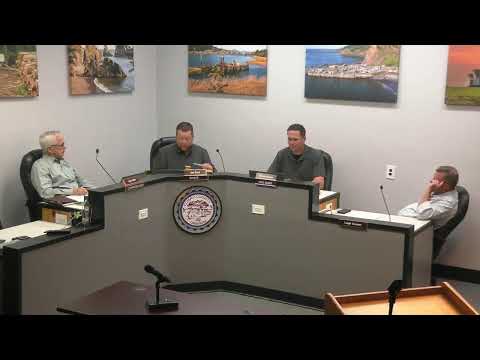
Curry County moves to pursue annexation into Coos County Area Transportation District after joint meeting
Summary
After a joint session with Coos County transit officials, Curry County commissioners approved motions to pursue annexation into the Coos County Area Transportation District effective July 1, 2027, designate a grant writer, and submit a regional planning grant, while officials pledged safeguards for Curry representation and service equity.
Curry County commissioners voted unanimously to pursue annexation into the Coos County Area Transportation District and approved related steps, saying the move could increase grant access and streamline transit operations across the southern Oregon coast.
The decision followed a joint meeting with Coos County transit leaders and local operators where Melissa Metz, general manager for Coos County Area Transit, described the district’s purpose as “to house sufficient capacity and expertise” for regulatory compliance and grant development, and urged the two counties to coordinate planning. “A unified district planning improves efficiency, reduces duplication, and strengthens long term infrastructure strategies,” Metz said.
Why it matters: commissioners and local transit managers said consolidation could make the combined district more competitive for grants and permit riders to travel across county lines without navigating multiple fare or reservation systems. Kathy Bernhardt, general manager of Great Public Transit, said combining resources “makes a lot of sense financially and, operationally,” and predicted better access to technology and grant funding for Curry.
Board members pressed for safeguards. Commissioners and speakers asked that Curry County have specific seats on advisory bodies and board structures to prevent local priorities from being diluted. Metz said the draft advisory-bylaws call for three Curry seats on the advisory committee and five for Coos; commissioners asked that those and other protections be written into annexation documents. “We would adopt service equity metrics and minimum service standards for both counties,” Metz said when describing mitigation to uneven service distribution.
Funding and compliance questions shaped the discussion. Ben Goldberg, a STIF program manager, explained that an intergovernmental agreement (IGA) would keep STIF distributions separate for each county, while annexation would consolidate allocations into a single qualified-entity allocation for the new district. Jennifer Boardman, regional transit coordinator, cautioned that the lead qualified entity must meet federal compliance requirements — audits, ADA and Title VI policies — and noted Curry County currently has outstanding items that would need resolution before serving as lead agency for federal programs.
Despite questions, the board approved three motions on the transit item: to pursue annexation effective July 1, 2027; to designate Melissa Metz as the county’s qualified-entity grant writer for ODOT public transportation grants for the 2027–2029 biennium (at $105 per hour); and to submit a Transportation and Growth Management grant to develop a unified public transportation plan for the South Coast region. Each motion passed by unanimous voice vote of the commissioners present.
Public comment raised local service concerns. Mary Rowe, a longtime transit rider, told the board she had been left waiting for scheduled pickups and blamed scheduling/dispatch problems with the Ecolane system at CCAT. “Disabled and elders...have been stranded and endangered,” she said, urging that dispatch coverage and Curry representation be required during the transition.
What happens next: staff and transit leaders said annexation will require resolutions and hearings and eventual votes in the counties; the process could include interim IGAs or transition agreements to address funding flow and compliance while protections are written into bylaws. The board said it will continue work on the proposed documents and return with answers to specific compliance and governance questions.