Get Full Government Meeting Transcripts, Videos, & Alerts Forever!
Get email alerts on the Technology Policy topic
No spam. Unsubscribe anytime.
Board advances first reading of policy to restrict personal devices and prioritize district Chromebooks
Summary
Board members approved the first reading of a revision to Policy 36‑30‑P1 to limit use of personal electronic devices in classrooms and encourage district devices for secure testing; staff said loaner Chromebook procedures and device replacement rules will be clarified before final adoption.
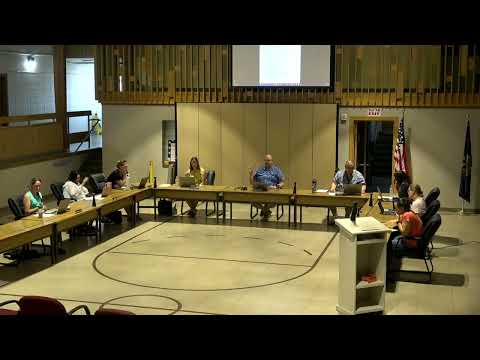
The Laurel School District board advanced a revision to Policy 36‑30‑P1 on first reading, moving to restrict students’ use of personal electronic devices in classrooms and to rely on district Chromebooks and secure testing environments.
Devin, the staff member who drafted the changes, told trustees the update aligns device use with how the district administers assessments and manages network security: “So I’ve mainly changed the policy to align with how we’re pushing with our phone policy, but also to restrict… originally we allowed students to bring in their own computers when the district couldn’t provide devices; now that most students have district devices, that need has changed.” He described technical reasons — secure lockdown browsers for testing and the risk that personal devices can bypass those controls — and recommended moving to district devices for classroom testing.
Staff described existing mitigation steps: Chromebooks are available as loaners in classrooms and the library, with a small number of loaner devices per classroom; the district also can track last‑seen device check‑ins and consider notifications when devices have not checked in for a set period. High school librarian Laurie Hodges said the problem appears limited in scale: “Truly, it’s less than 5% of kids that this is an issue for.”
Trustees asked about practical implementation: charging infrastructure in older classrooms, limits on repeated long‑term loaner checkouts for the same student, and the replacement cost for devices damaged or lost. Devin said replacement cost is handled as the straight parts cost and current practice is for families to pay the replacement price (staff discussed an amount in the record roughly described as about $280). Board members asked staff to draft specific guidelines (checkout thresholds, monitoring intervals and notification triggers) and to return the policy for final adoption after those operational details are prepared.
The board approved the policy on first reading and asked that staff prepare implementation guidance for the next meeting cycle.