Get Full Government Meeting Transcripts, Videos, & Alerts Forever!
Get email alerts on the Federal Medicaid And 988 topic
No spam. Unsubscribe anytime.
State webinar outlines H.R.1 Medicaid changes and reassures 988 remains funded
Summary
Kelly Crosby, director of the Division of Mental Health, Developmental Disabilities and Substance Use Services, told a statewide webinar that while H.R.1 could change Medicaid eligibility and financing, North Carolina will keep 988 supported and urged communities to help shape state implementation.
Kelly Crosby, director of the Division of Mental Health, Developmental Disabilities and Substance Use Services, told attendees at a statewide webinar that recent federal actions could change how North Carolina finances and administers Medicaid but that the state will continue to support the 988 crisis lifeline.
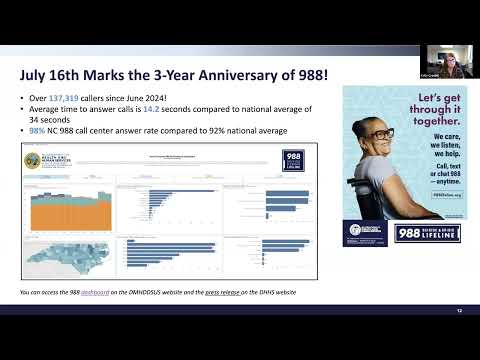
"988 saves lives," Crosby said, summarizing the department's outreach and usage metrics for the three-year-old crisis line and urging callers to use the service for any crisis. She reported the state's 988 dashboard has reached more than 135,000 people and said the Real Crisis Center—North Carolina's primary 988 partner—remains ready to serve callers, including youth who identify as LGBTQ, despite a federal funding change for the Trevor Project's branded routing.
Crosby also described H.R.1 (referred to at the webinar as House Resolution 1) as legislation that will change federal Medicaid policy and "have very real impacts here in North Carolina." She said the bill could limit state options for financing Medicaid (for example, changes to how hospitals are taxed to support the state share), increase the frequency of eligibility redeterminations (she offered "every six months" as an example), and introduce work requirements for some groups. Crosby noted exemptions may remain for people with serious mental illness, disabilities, or substance use disorders, but that those exemptions may require proof of active treatment and appropriate diagnoses.
Crosby urged stakeholders not to assume immediate changes and asked providers and community members to participate in forthcoming state planning and comment opportunities. "There's still time," she said, "to impact federal rolling out of this bill, the state response to this bill, and the way we roll this out at the state level." She added the division will share updates and solicit input as more details become available.
The director also announced related public-engagement items on the department agenda: a state NAMI town hall later in the month, a posted suicide prevention action plan open for public comment, and other resources and webinars where stakeholders can provide feedback.