Get Full Government Meeting Transcripts, Videos, & Alerts Forever!
Get email alerts on the Pension Reform topic
No spam. Unsubscribe anytime.
Shelbyville committee weighs switching city retirement plan amid customer-service and cost concerns
Summary
Shelbyville’s Employee Benefits Review Committee discussed moving the city’s retirement arrangement from a Voya/401(k) structure to the state TCRS hybrid plan or a different provider, asking consultants to run side‑by‑side scenarios and scheduling a follow-up meeting on July 27 to review results.
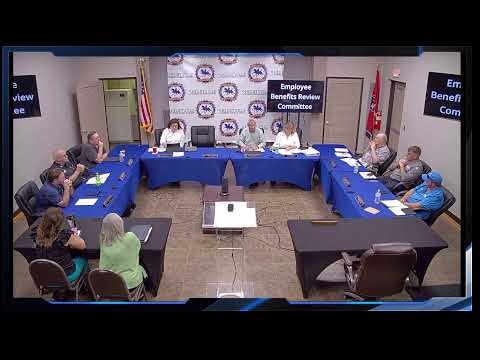
At a meeting of the Shelbyville Employee Benefits Review Committee, members discussed whether to keep the city’s current Voya/401(k) arrangement, switch to the state TCRS hybrid retirement plan, or seek a different provider to improve customer service and long‑term outcomes for employees.
The city recorder presented a fee comparison that, in her summary, showed the state plan’s fees would be lower: “the state's plan would be 47.61% less,” she said, and the committee spent most of the session probing what that difference would mean for city and employee contributions, vesting, and projected retirement balances.
The discussion focused on three practical issues: who bears the fees and how savings are recognized, the different contribution mixes under each plan, and customer service problems employees have reported. Committee members clarified that the fee comparison reflects fees charged to employees and that any savings would accrue within the retirement fund rather than showing up on the city’s operating budget. Several members described the city's current employer contribution to the 401(k) as 7%. Under the TCRS scenario discussed in the meeting, the city’s contribution was described as roughly 9% while employees would be expected to contribute about 5% under a mandatory TCRS hybrid — a change participants said would shift some costs and affect take‑home pay and long‑term savings.
Committee members asked for apples‑to‑apples scenarios that compare: (1) the city’s current 401(k) with a 7% city contribution plus voluntary employee contributions; (2) a hybrid TCRS model with roughly 9% city and 5% employee contributions and a split between a defined‑benefit portion and a 401(k) portion; and (3) Voya’s floor/annuity product. The recorder agreed to ask Greg Lawrence and TCRS to produce sample projections for two hypothetical employees (a 20‑year‑old and a 40‑year‑old) showing projected account values and monthly income at ages 55, 60 and 65.
Members also raised recurring customer‑service complaints tied to past vendor transitions. One committee member described losing access to an account and said it “took me at least 7 months” to regain access; another said a retired employee’s distribution had been denied. Participants suggested that personalized, local service — or at least better outreach and advisor contact — could meaningfully affect employees’ willingness to increase contributions and their long‑term retirement outcomes.
There were no formal policy votes on switching plans at this meeting. The committee set a follow‑up meeting for July 27 at 2:00 p.m. in the same room to review the requested scenarios and any additional information from TCRS and Greg Lawrence. The committee also approved the meeting agenda and the minutes from May 27, 2026, by voice votes earlier in the session.
The committee concluded by asking staff to assemble the comparison materials and to ensure representatives who can answer technical vesting and distribution questions attend the next meeting.