Get Full Government Meeting Transcripts, Videos, & Alerts Forever!
Get email alerts on the Public Health Interlocal topic
No spam. Unsubscribe anytime.
Cache County approves redraft of Bear River Health Department interlocal, shifts Medicaid contracting to department
Summary
The Cache County Council approved a redrafted multi‑county interlocal agreement that clarifies public‑health duties, adds ex‑officio seats (including the county executive and a Utah State emergency manager), creates an advisory seat on the Behavioral Health Advisory Council, and delegates Medicaid contracting responsibility to the health department.
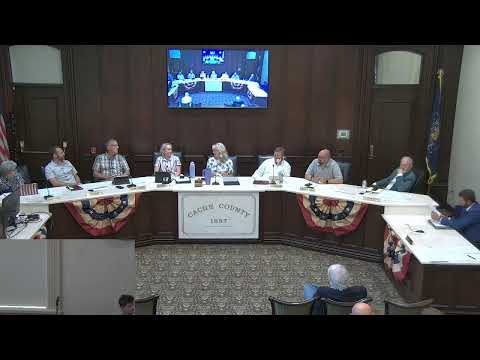
The Cache County Council voted to approve a redrafted multi‑county interlocal agreement for the United Local Health Department after a presentation from Jordan Mathis, director of the Bear River Health Department. Mathis said the edits tie public‑health duties back to state code and expand behavioral‑health responsibilities. "The United Local Health Department's important because that's the one that gives us the responsibility to oversee behavioral health services," Mathis told the council.
Mathis outlined several substantive changes: the agreement adds two ex‑officio members to the board — one being the Cache County executive and the other an emergency manager appointed by Utah State — and provides an ex‑officio seat on the Behavioral Health Advisory Council. Mathis said those advisory members will participate in discussions but will not vote on recommendations returned to the counties. He also said the revised language delegates to the United Local Health Department the authority to contract directly with Medicaid for a capitated behavioral‑health model and to coordinate the counties on any Medicaid match requirements.
Council members sought clarification about the scope and timing of the changes. Mathis acknowledged the department had initial "sticker shock" when first billed under the capitation model but said the state will reimburse counties if they overpay on the front end: "If we overpay on the front end, then they reimburse us on the back end," he said. Mathis added that the change is intended to streamline contracting and budgeting among the participating counties.
After discussing procedural requirements (the chair noted the interlocal must be approved by resolution), a council member moved to suspend the rules and approve the resolution redrafting the interlocal agreement. The council approved the motion by voice vote; the chair announced the resolution had passed and thanked Mathis for the presentation.
The action transfers certain contracting responsibilities to the health department and clarifies representation on advisory bodies, steps proponents said are intended to strengthen the counties' ability to manage behavioral‑health services collaboratively. The council paired the approval with directions to ensure the agreement and accompanying documents are circulated to council members for review and to follow statutory notice requirements for related budget or contract items.