Get Full Government Meeting Transcripts, Videos, & Alerts Forever!
Get email alerts on the Historic District topic
No spam. Unsubscribe anytime.
Folsom council reintroduces historic‑district code changes amid CEQA questions and public concern
Summary
Council introduced an ordinance readopting changes to historic‑district design review that delegate some minor approvals to staff; planning staff said the changes are exempt from CEQA, but residents and preservation advocates warned the exemptions could let visually prominent fences or walls escape appropriate review.
The Folsom City Council on July 14 held a public hearing and introduced for first reading an ordinance (13‑75) to readopt earlier amendments to chapter 17.52 of the municipal code governing the historic district. Staff said the changes delegate minor design reviews to staff, speed up approvals and reduce fees; they also said they bolstered CEQA findings after litigation challenged the prior adoption.
Desmond Perrington, planning manager, told the council the amendments were intended to relieve lengthy and costly historic‑district review for small projects such as certain window replacements, signs and minor repairs. "These were the things that we were trying to address," he said, adding staff had added supporting analysis for the record after lawsuits questioned the earlier CEQA determination.
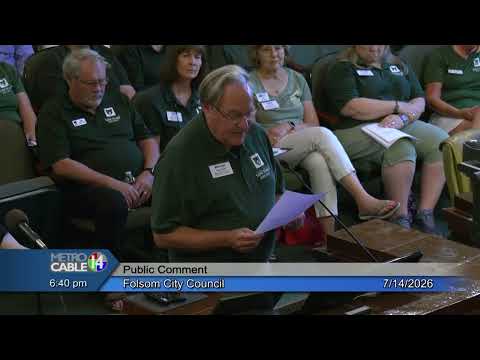
Several public commenters, including preservation advocate Loretta Headinger, urged more careful drafting and said exemptions for "structures" versus "buildings" could allow visually significant elements such as fences, walls or pergolas to avoid review. "Details matter in a historic district," Headinger said, and she urged the council to consider consultant recommendations and clearer appeals language.
Council members asked staff hypotheticals about permanence and CEQA exceptions: would a durable masonry retaining wall or a replacement that changes appearance trigger review or CEQA analysis? Staff answered that work tied to a listed or eligible historic resource would be referred to the historic district commission and that features exceeding typical fence standards (for example, taller than six feet or requiring building permits) would be routed for review.
After discussion, the council moved to introduce and give the first reading of ordinance 13‑75. The motion passed on roll call (Aquino Yes; Kozlowski Yes; Leary Yes; Rorba Yes). Staff said the city will continue work on objective design standards for the historic district as part of a broader zoning code update and noted that the changes are already in effect pending readoption.