Get Full Government Meeting Transcripts, Videos, & Alerts Forever!
Get email alerts on the Policing Revenue topic
No spam. Unsubscribe anytime.
Resident urges Warren to stop what he calls police-driven 'revenue extraction'
Summary
Resident Joshua J. Almeda told the Town Council he believes police and town practices—staging on church and private property, mandatory court costs, EMS fees and federal grant metrics—are being used to generate revenue in violation of constitutional protections and state law, and demanded immediate remedial action.
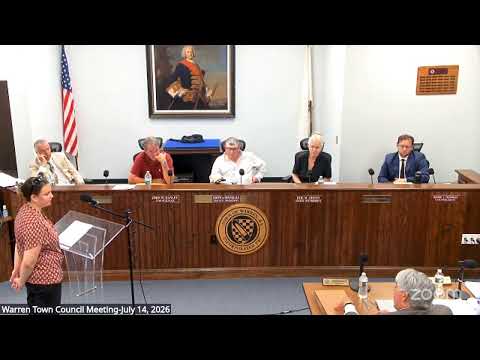
Joshua J. Almeda, who identified himself as a Warren resident, father, business owner and combat veteran, used the meeting’s public‑comment period to accuse the town and its police of using enforcement and fees to generate revenue from residents.
Almeda told the council: “The town of Warren using police power to illegally generate revenue on church property, on private property, on the bike path, through fees, through mandatory court costs, through federal grants.” He listed a string of practices he said amounted to “revenue extraction” and called on the council to “cease the violations immediately” and to dismiss citations tied to those locations.
Almeda cited constitutional protections and state law — invoking the First and Fourth Amendments and several Rhode Island statutes — and asked the council to disclose locations where officers stage enforcement, to stop staging on church property, and to reimburse those charged fees he labeled fraudulent. He also said federal grant conditions can create a de facto quota system that incentivizes citations and enforcement metrics.
Council President acknowledged the comment and said the town solicitor would follow up on the points raised. No council action was taken during the meeting in response to Almeda’s demands.
Why it matters: Almeda’s remarks raise questions about enforcement practices, the town’s use of grant conditions and the potential civil‑rights implications of targeted enforcement. The council’s pledge that the solicitor will review and respond is the next procedural step; any formal inquiry, policy change or refunds would require further action by staff or council vote.