Get Full Government Meeting Transcripts, Videos, & Alerts Forever!
Get email alerts on the Wastewater Management topic
No spam. Unsubscribe anytime.
Harwich commissioners press for broader approach to Comprehensive Wastewater Management Plan
Summary
Commissioners told the Select Board's liaison and consultant that the town's CWMP should include alternatives to sewer-only solutions — such as innovative/alternative (IA) systems and recharge studies — and asked staff to produce questions and possible recommendations for the Select Board and GHD.
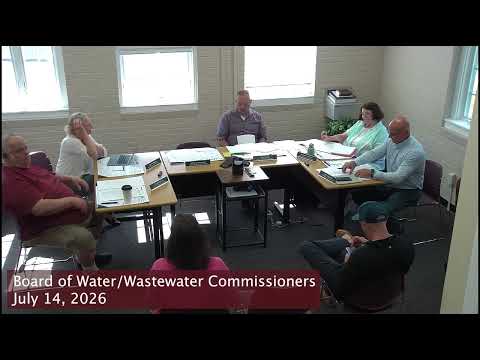
The Harwich Board of Water and Wastewater Commissioners spent a substantial portion of its meeting pressing for a broader, less sewer-centric Comprehensive Wastewater Management Plan (CWMP) and asking the Select Board liaison to ensure the town's consultant brings alternatives back to the public.
Commissioners and residents raised concerns that the CWMP, as presented, focuses primarily on sewer construction rather than a full toolbox of options to reduce nitrogen. A committee member said, "If we're gonna call it a comprehensive wastewater management plan, there could be a lot more in it that makes it comprehensive and not just a sewer plan." The Select Board liaison, Jeff Hamler, told the commission he will carry its questions and materials to the Select Board and to meetings with the consultant.
Why it matters: Harwich must meet watershed permit requirements and remove nitrogen from the Herring River watershed; how the town balances sewers, recharge sites and alternate technologies will affect costs, phasing and which neighborhoods are prioritized for work. Commissioners emphasized that the town's decisions now will shape operations the water department will later inherit.
During the discussion staff and commissioners reviewed recent procurement steps and funding actions. Staff recalled a May town-meeting appropriation of $150,000 intended to continue recharge-area investigation; the subsequent contract for GHD was presented to the town manager and not signed by the Select Board, leaving the investigation paused. Commissioners urged the Select Board and the consultant to clarify the status of that contract and to return with an explicit list of technical questions and alternatives for public review.
The commission also debated whether and how to incorporate innovative/alternative (IA) systems into the CWMP. One commissioner outlined how IA systems could be counted toward a watershed permit: "When we submit our watershed permit application, the IA technology that is being proposed needs to be supported with all the technical data that says we're gonna remove 200 kilograms [of nitrogen]," and the rest by sewer construction. Commissioners noted that DEP will only accept IA contributions backed by approved, verifiable technical performance and that some IA systems may be less suitable for seasonal properties.
Commissioners suggested practical next steps: draft a short white paper or list of prioritized questions about alternative technologies and recharge siting, invite GHD to introduce its project team and deliver an update at the commission's next meeting, and have the Select Board liaison present the commission's materials to the Select Board. Hamler said he would bring the commission's questions and any notes from his meetings with Dennis back to the commission as public documents.
The commission did not adopt a formal binding position on the CWMP at this meeting; members agreed to continue the conversation, collect technical questions and keep the item on future agendas while staff pursues the outstanding contract and consultant-team introductions.