Get Full Government Meeting Transcripts, Videos, & Alerts Forever!
Get email alerts on the Local Finance topic
No spam. Unsubscribe anytime.
Dolores County reports healthy May finances but flags federal SNAP error-rate recalculation
Summary
County staff reported May finances were healthy but warned a federal recalculation put SNAP error rates at about 10.8'10.9%, which could raise county cost-sharing; staff will work with the state and draft a letter to legislators and will return with updated budget implications.
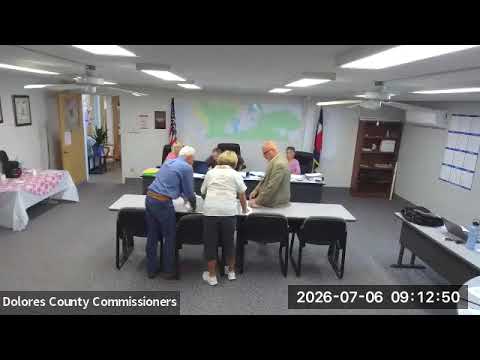
County fiscal staff presented the May 2026 financials July 6 and described a generally healthy balance despite some over-expenditures in certain lines. Glenda (speaker S5) told commissioners the county's overall balance was "very healthy," and that the packet shows checks written out for posting.
Glenda also explained that a federal back-end recalculation had placed Dolores County's SNAP error rate near 10.8'10.9% using 2025 data, which is higher than the state's internal 3.2'3.3 expectation. The state is asking the federal government to allow use of 2026 numbers (which staff say are nearer 6%), because a higher error rate could push counties into higher cost-sharing tiers. "At a 6 percent error rate, there's no cost sharing... 10 percent and above, the state has to pay 15% of those benefits," Glenda said, and staff noted state officials are projecting a 20% county match in worst-case budget planning and suggested the county assume a 20% match in its preliminary budget.
Commissioners asked about other states that saw similar jumps and whether the sampled-case methodology could distort small-county statistics; staff agreed to follow up and suggested drafting a joint letter to legislators describing the county's concern about the calculations (a Weld County template was offered as an example). The board agreed staff should draft and circulate such a letter for review.
Glenda also announced the county had been awarded a $20,000 grant from the Rocky Mountain Healthy Neighbor program for one-time staff retention funds; she asked permission to sign paperwork and to develop a distribution plan with HR. Commissioners asked to workshop the distribution details to track any ancillary costs.
Next steps: staff will circulate caseload numbers and updated calculations when available, prepare a draft letter to state/federal representatives about the SNAP error-rate methodology, and schedule a workshop to discuss distribution of the onetime retention grant.