Get Full Government Meeting Transcripts, Videos, & Alerts Forever!
Get email alerts on the Affordable Housing topic
No spam. Unsubscribe anytime.
Cambria board grants three‑year water extension for 33‑unit Cambria Pines affordable project
Summary
After a lengthy presentation and public comment, the Cambria Community Services District board voted unanimously to extend a water intent‑to‑serve letter for People’s Self Help Housing’s Cambria Pines by 36 months, citing recent grant awards and ongoing tax‑credit applications.
The Cambria Community Services District board voted unanimously on Jan. 8 to grant a 36‑month extension of a water “intent to serve” letter to People’s Self Help Housing for the proposed 33‑unit Cambria Pines affordable housing project on Schoolhouse Lane.
People’s Self Help Housing associate director Juliana Gallardo Wilkie, the project lead, told directors the project preserves about 2.83 acres of open space and would include a community center and a mix of one‑, two‑ and three‑bedroom units. “We respectfully request the approval of the water intent to serve letter for 24 months,” she said during the presentation, later clarifying the organization sought a longer extension when the board discussed the motion.
In response to questions, Gallardo Wilkie said the project has secured a $7,000,000 HCD grant that substantially improved its competitiveness for state tax credits, which remain the last piece of financing needed to break ground. “Once we secure those tax credits, we then sell those tax credits to a private bank, or an equity firm, and then they give us the construction loan we need,” she said.
Directors and speakers pressed for specifics: a board member asked the project’s total cost; Gallardo Wilkie corrected an earlier number and said the development’s current total is about $28,000,000. A district staffer noted the developer would pay roughly $700,000 in capacity fees and that infrastructure work — including extending a water main to the site — would follow construction permitting and payment of those fees.
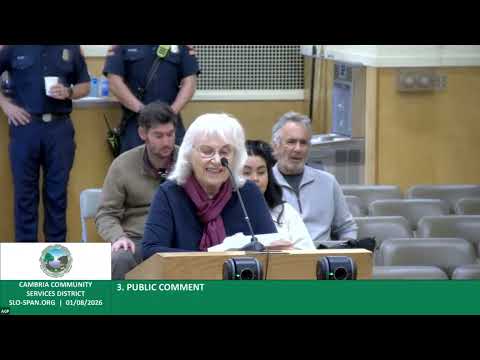
Public commenters were divided. Some residents and civic leaders urged the board to support the project and said it addresses local workforce housing needs; others questioned construction costs and favored prioritizing water meters for private lots on the district wait list. “For $35,000,000, you could buy two motels in San Simeon,” one resident said in public comment, arguing motel conversion might be cheaper, while PSHH representatives replied the project is entitled and built for families with multiple bedroom types.
Vice President Dean moved to approve a 36‑month extension; President Farmer seconded. The board approved the extension by roll call vote with all directors voting aye. Staff and PSHH agreed the district will issue a connection permit and collect capacity fees when the developer is ready to break ground.
What’s next: PSHH will reapply for tax credits in upcoming state rounds and staff will work with the developer on permitting and capacity fee timing; the board discussion indicated staff might wait to install on‑site infrastructure until financing and construction are certain.