Get Full Government Meeting Transcripts, Videos, & Alerts Forever!
Get email alerts on the Zoning Replat topic
No spam. Unsubscribe anytime.
Commission split over Shadow Valley lot split as ADU law reshapes local control
Summary
The commission voted 3–2 to recommend approval of a two‑lot replat in the Shadow Valley/Valleybrook area, after residents raised concerns about drainage, tree loss and neighborhood character. Commissioners debated how a 2025 state law preempting local limits on accessory dwelling units (ADUs) affects their balancing test.
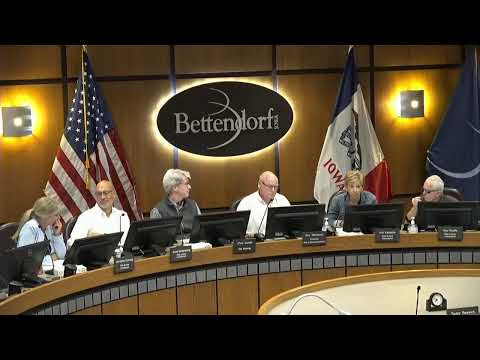
The Bettendorf Plan & Zone Commission on July 15 recommended approval (3–2) of Case 26‑034, a proposed two‑lot replat of a roughly 1.5‑acre property in the Valleybrook/Shadowbrook area. The decision followed an extended hearing that included staff analysis, letters in the record and substantial public comment both for and against the split.
Staff told commissioners the proposed lots meet R‑1 bulk standards and that the split is consistent with the comprehensive plan. Staff also flagged a 2025 change in Iowa law that preempts many local restrictions on accessory dwelling units (ADUs), noting that the law changes the regulatory landscape and is relevant to the commission's statutory balancing test under Iowa Code Chapter 354.
Neighbors who oppose the replat argued that the large‑lot character, mature trees and open green space are defining features of the neighborhood and that subdividing would increase impervious surface and risk drainage or erosion problems. "This neighborhood is beautiful the way it is. Let it maintain," said Russell Campbell, a nearby homeowner. Multiple residents submitted written objections citing water flow and erosion concerns.
Several adjacent homeowners supported the application, saying the proposed new lot would still exceed minimum lot size requirements and that properly engineered permits would address drainage. One nearby neighbor said a house thoughtfully sited could improve on existing unmanaged drainage at times of heavy rain.
Applicant Fred Dodds, who presented at the hearing, said he bought the parcel as an investment and asked the commission to permit a lawful use of his property. "We're property owners. We have the right to make a lawful use of the property provided we comply with the city's ordinances," Dodds said.
Commissioners discussed the statutory balancing test, the limits of their authority under the ADU law, and practical site‑engineering checks that will follow at the building‑permit stage (erosion control plans, retaining‑wall engineering and stormwater requirements). Legal counsel reminded the commission that if they recommend denial, the council stage requires specific findings and that certain outcomes before council have higher vote thresholds.
The recommendation (3–2) will be forwarded to City Council for final consideration. The commission’s discussion reflected competing goals: protecting neighborhood character and ensuring engineering safeguards, while also recognizing state law’s constraints on local regulation of ADUs and property‑owner rights.
Next step: City Council will receive the P&Z recommendation. If the applicant pursues the split regardless of council outcome, separate permitting and engineering reviews will still be required before any building occurs.