Get Full Government Meeting Transcripts, Videos, & Alerts Forever!
Get email alerts on the Aquaculture Home Occupation topic
No spam. Unsubscribe anytime.
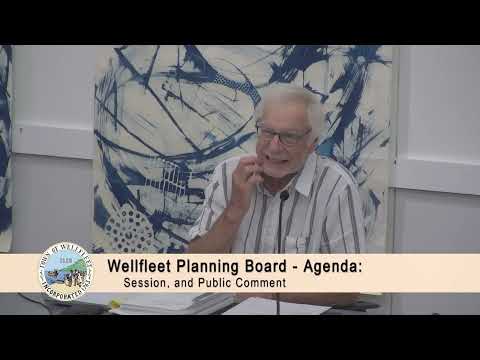
Planning board debates rewriting home-occupation rules to protect shellfishermen and small trades
Summary
Board members reviewed draft changes to home-occupation and service-trade definitions, discussed bulk-storage triggers for landscapers, and considered moving or adding marine aquaculture to farm-family uses so small grant-holders and shore-based aquaculture work are protected in residential zones.
At the board’s request, staff presented proposed revisions to the planning board's home-occupation, service-trade, and service-trade-business definitions. The presenter explained the goal: simplify and clarify when a residential property can host a trade or limited business without moving to a commercial zone.
Building inspector Justin Post suggested that "bulk storage" (stone, mulch, compost) be explicitly defined as a special-permit trigger so landscapers who keep large quantities on-site are reviewed rather than automatically treated as home occupations. "If you're doing bins and such, not at a small quantity, that's usually a special permit," Post said.
Members spent an extended portion of the meeting discussing marine aquaculture and shellfishing. Several participants argued small-scale shellfish grant holders and shore-based fishermen fall outside state farm protections tied to upland acreage and asked the board to add marine aquaculture to farm-family agricultural uses or explicitly permit aquaculture activity in residential zones. "The USDA and federal government has brought marine aquaculture under its wing under agriculture," one public participant observed, and multiple board members said adding aquaculture to farm uses would be the simplest way to protect local shellfishing activity that currently occurs in residential areas.
Board members signaled they prefer clarifying definitions and use-table placements rather than creating an entirely new bylaw. Staff was asked to draft language that either moves marine aquaculture into the farm/family agricultural use table or makes it explicitly permitted in residential zones so smaller grant-holders are not forced into commercial districts.
What happens next: staff will prepare edited language addressing bulk-storage triggers, clearer service-trade categories and options for including marine aquaculture under farm-family uses. Those drafts will be circulated to the board and placed on a future agenda for vote or further amendment.
No formal change to the zoning code was adopted at the meeting; the board directed staff to prepare draft edits for forthcoming meetings.