Get Full Government Meeting Transcripts, Videos, & Alerts Forever!
Get email alerts on the Housing Cluster Bylaw topic
No spam. Unsubscribe anytime.
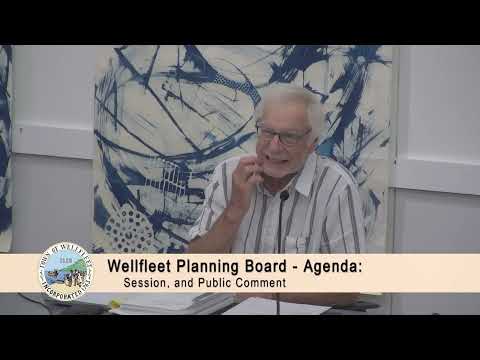
Wellfleet planning board hears land-trust cluster bylaw to lower entry price for workforce housing
Summary
Developer and trust representatives urged a cluster-development option that would let a community land trust retain ownership of land while homeowners lease structures, arguing shared-appreciation leases and exclusive-use areas could expand local workforce housing. Board asked staff to draft revisions for August.
Chris Durbin, identified as chair of the Wellfleet Affordable Housing Trust and speaking on behalf of an LLC that owns a potential development parcel, urged the planning board to adopt cluster-bylaw edits that would allow community land-trust ownership of land while homeowners hold long ground leases to structures. "This model is about enabling people to actually purchase a home who otherwise wouldn't be able to," Durbin said.
Durbin told the board the edits would permit "exclusive use areas" in place of legal lots so the land could remain owned by the trust while individual households have clearly delineated private areas. He described two examples in town where the trust owns land and homeowners hold 99-year ground leases; in those cases, resale appreciation is limited, and gains are shared with the trust.
Board members pressed for details on how the arrangement would affect density, septic calculations and lot coverage. The chair explained that, under the draft cluster approach, the entire parcel is considered for septic and bedroom-count math. Members and Durbin agreed the proposed change would not increase density beyond the bylaw's existing bedroom-based limits but would require careful drafting to avoid unforeseen neighborhood impacts.
Several members expressed concern about resale restrictions and the amount of equity retained by homeowners. Durbin said the typical shared-appreciation lease used in the examples limits annual appreciation to CPI and splits the gain (Durbin cited a 50/50 split in his examples), which reduces the initial purchase price by removing land cost from purchase calculations.
The board also debated whether the cluster bylaw should explicitly supersede two existing affordable-housing provisions when a community land trust is used; Durbin recommended doing so to reduce developer confusion. Members asked staff to check the legal viability of the supersede language.
Short-term rentals and year-round occupancy surfaced as a key concern. Durbin said community-land-trust leases require year-round occupancy and would prevent short-term rentals in projects using the trust model, but members asked for explicit bylaw language or special-permit conditions to reduce the risk of seasonal rentals in market-rate cluster developments.
What happens next: board members asked Beth (staff) to draft revised cluster-bylaw language incorporating the exclusive-use option, shared-appreciation lease language and potential conditions on short-term rentals. The draft is expected to be circulated ahead of the August planning-board meeting for additional comment and possible public review.
The planning board did not vote on the bylaw tonight; members instructed staff to prepare draft language and to place the cluster edits on the August agenda for substantive review.