Get Full Government Meeting Transcripts, Videos, & Alerts Forever!
Get email alerts on the Court Docket Pleas Scheduling topic
No spam. Unsubscribe anytime.
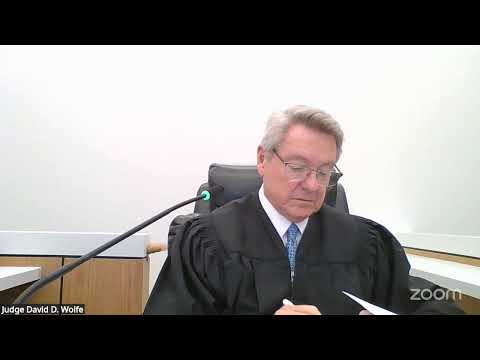
Cheatham County judge accepts two no-contest pleas, sets dates for dozens of cases
Summary
At a docket call, the judge accepted no-contest pleas and sentences for JD Allen Binkley and Kenneth Mitchell Bearden, dismissed at least one case, and set status or trial dates for many defendants, with multiple matters moved to July 28 or November 10.
A Cheatham County judge presiding over a docket call accepted two no-contest pleas and imposed sentences while arraigning and rescheduling dozens of other criminal matters.
The judge told Ryan Scott Babcock that the court had set his matter for trial in November and emphasized that the November setting was his final opportunity to resolve the case before trial either by plea or by proceeding to a jury. The state later moved to dismiss the case against Alexander Beauchamp, and the judge dismissed it pursuant to the parties greement.
In docket number 2026CR19894, JD Allen Binkley identified himself in court and entered a plea of no contest to a fourth-offense driving-under-the-influence charge. The prosecutor summarized the evidence that would be presented at trial, including a reported BAC of 0.341 and three prior convictions. The judge accepted the plea, stating, "I found you guilty, sentenced you to 1 year in the Cheatham County Jail suspended to probation after serving 150 days," and imposed a $3,000 fine, an eight-year suspension of his driver—s license, interlock requirements for any restricted license, mandatory reporting to probation, and a condition of no alcohol during probation. The sentence allows substitution of up to 28 days of drug treatment for part of the confinement, and the court directed Binkley to report to the jail to begin his sentence on the date the court set.
Kenneth Mitchell Bearden also entered a no-contest plea in docket 19816. The court accepted the plea to count 1 (aggravated assault) and sentenced Bearden to five years in the Tennessee Department of Correction suspended to supervised probation after credit for roughly 10 months served; the court ordered completion of an inpatient treatment program at 1Life as a condition of probation, forfeiture of any weapon involved, payment of court costs, and no contact with the victim. The judgment runs concurrently with a related violation-of-probation docket and the court dismissed that violation as part of the plea agreement.
Throughout the session the judge scheduled or rescheduled dozens of arraignments and status hearings. Common dates the court set were July 28 for defendants whose lawyers asked for short continuances and November 10 as a general status date to allow counsel time to review discovery and prepare. The court handled indigency affidavits, appointed public defenders where the record supported it, and in at least one case authorized dismissal of a probation violation with phone reporting if probation concurred.
The judge concluded by running through the remaining at-large cases and noting upcoming motions and chancery appearances; no further matters were raised, and the court adjourned.
What happened next: defendants were ordered to report or appear on the dates set; sentences and plea conditions noted above remain the formal court orders. The court recorded statutory grounds during arraignment proceedings (TCA references read as part of grand-jury presentments).