Get Full Government Meeting Transcripts, Videos, & Alerts Forever!
Get email alerts on the Personnel Policy topic
No spam. Unsubscribe anytime.
Whiteland council adopts revised nepotism rule to allow family members in volunteer fire department with safeguards
Summary
Council adopted an amended nepotism ordinance to permit multiple family members to serve in the volunteer fire department while preventing direct supervisory authority between relatives and routing supervisory actions up the chain; council approved the ordinance 4‑0.
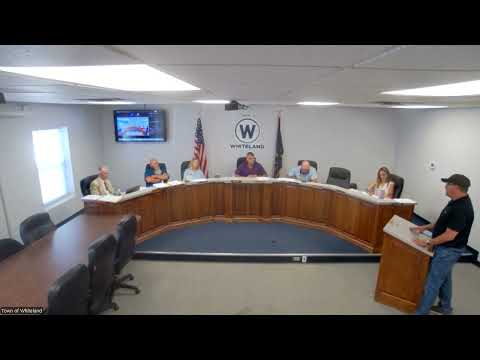
The Whiteland Town Council voted July 14 to adopt an amended nepotism ordinance tailored to volunteer firefighters, allowing multiple family members to serve while preventing relatives from exercising direct supervisory authority over one another.
Town attorney Watson said the amendment recognized the reality of volunteer fire departments where several family members may join and explicitly restricts any supervisory, disciplinary or personnel decisions by a relative if that relative would be the direct supervisor. Instead, any supervisory action must be escalated to the next higher non-related person in the chain of command. Watson also said the amendment was not a blanket change across town departments but was limited to the volunteer fire department.
Council members discussed how SOPs and shift staffing would prevent problematic pairings, and fire staff explained existing SOPs that limit related members from working the same truck or directly supervising one another. After clarifying questions about how absences or shift changes would be managed, a councilmember moved to adopt Ordinance 2026‑03. The motion carried by unanimous roll call (4‑0).
Council and staff agreed to provide SOP clarification to the council in follow‑up and noted that any instance of a relative being placed in a direct supervisory role would be handled by the next person in the chain and by written SOPs.
The ordinance change was paired with approval of three conflict‑of‑interest disclosures for specific fire personnel; those disclosures were approved on a single motion and roll call (4‑0).