Get Full Government Meeting Transcripts, Videos, & Alerts Forever!
Get email alerts on the Building Codes Adoption topic
No spam. Unsubscribe anytime.
Graham County adopts updated 2023–2024 model building, fire and electrical codes with local amendments
Summary
Graham County staff told supervisors they are moving the county from early-2000s code editions to the 2023–2024 model-code cycle to align with neighboring jurisdictions and to add local amendments limiting some new mandates and strengthening enforcement tools including abatement and liens. The board approved the changes as amended.
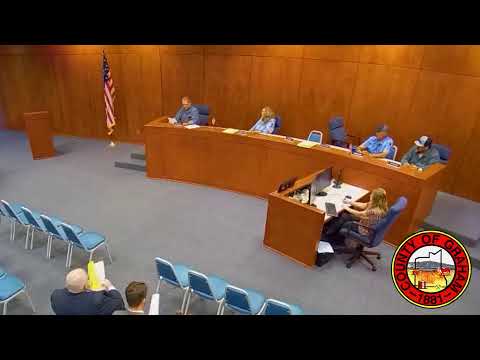
Graham County supervisors on an amended agenda approved a package of updates to the county—uilding, plumbing, mechanical, fuel-gas, electrical and fire codes that staff said moves the county from editions adopted in the early 2000s to the 2023 and 2024 model-code cycle while adding several local changes.
Mark Kavanaugh, Graham County planning and zoning, told the board the county is "jumping up from the 2002 building codes all the way to the 2024 building codes" to align Graham County with the City of Safford, the towns of Thatcher and Pima and to reduce contractor confusion. "We're becoming unified," he said.
Why it matters: staff said the update brings life-safety improvements in line with national model codes but also includes county-specific amendments intended to limit cost burdens on residents and address local resource constraints. The board approved the package after discussion and a motion to adopt the codes as amended.
What changed: the board adopted the 2024 International Building Code and related 2024 international codes (residential, mechanical, fuel gas, existing building), the 2023 National Electric Code and the 2024 International Fire Code, each "as amended." Key local modifications staff highlighted included retaining existing local height limits (no change to the county—aps of 45 feet to the highest point and 30 feet to the top of the outside wall), insertion of local design parameters (ground snow load 0; wind design 115; seismic design category C; mean annual temperature 62.5—) and adherence to FEMA flood-hazard processes handled by county engineering.
Residential sprinkler language: staff said the new International Residential Code requires fire sprinklers in certain dwellings, but the county amendment changes multiple provisions from "shall" to "may," so sprinklers will be allowed but not required where water supply limitations exist. Kavanaugh said that flexibility is conditioned on verification that the City of Safford or Graham County Electric Co-op can provide adequate water for suppression systems.
Electrical changes: adopting the 2023 National Electric Code but narrowing the local scope of some requirements, the county mendment limits combination-type arc-fault circuit interrupter (AFCI) protection to bedroom branch circuits rather than requiring AFCIs for other living-area circuits. As Kavanaugh explained, the narrower requirement reduces incremental cost to homeowners while prioritizing bedroom protection because "when a disaster's gonna happen, they're gonna be in their bedroom."
Energy and ventilation: staff proposed that the International Energy Conservation Code provisions be applied only to government buildings rather than to private residential construction, citing cost and local climate conditions. The county also proposed deleting IRC sections that would require intermittent exhaust-timer controls for bathroom fans and removing certain interior lighting-control requirements, saying the items are not a good fit for Graham County's dry climate.
Fire code and enforcement tools: the adopted 2024 International Fire Code includes local amendments that, among other things, (1) restrict new use of shake/wood shingles except for limited repairs or small additions, (2) allow the building official to serve as the fire marshal for code enforcement purposes, and (3) authorize abatement actions and the recordation of liens when property owners fail to remedy immediate threats to life or property. Kavanaugh said giving the building official fire-marshal authority "really opens a lot of doors for us" to address blighted properties.
Code enforcement process and resident support: staff described the county's complaint-driven enforcement workflow (complaint intake, inspection, notice and 30-day compliance window, then additional notices, citation, hearing and potential abatement). The county reported 42 active code cases and said it now offers a 14-foot dump trailer for residents; Graham County pays dump fees when the trailer is loaned to residents to assist cleanups.
Action and next step: a commissioner moved to approve the new codes as amended; the motion was seconded and approved by the board. Staff said the amendments are a work session recommendation and that the board's adoption moves the county to the new code cycle with the local changes described.
Quotes: Kavanaugh summarized the change as a move to align the county with neighbors and to prioritize life and safety: "We're jumping up from the 2002 building codes all the way to the 2024 building codes," and later, "Because water is a big deal here in Graham County." The board did not record a roll-call tally by name in the transcript segments provided.
Implications and limitations: staff and board members emphasized that some requirements were modified specifically to reduce cost burdens on residents (for example, limiting AFCIs to bedroom circuits) and to account for local resource constraints (water availability for sprinklers). Several technical parameters (ground snow load, wind design, mean annual temperature) were recorded in the amendment language for local design reference. The transcript does not include a full roll-call vote with named tallies.