Get Full Government Meeting Transcripts, Videos, & Alerts Forever!
Get email alerts on the Education topic
No spam. Unsubscribe anytime.
Las Vegas City Public Schools outlines four‑pillar roadmap to boost proficiency and narrow career‑training to local demand
Summary
Las Vegas City Public Schools presented a four‑pillar plan that sets a 20% target for reading and math proficiency, requires tracked four‑year plans starting in 9th grade, expands early career awareness, and bars new high‑school career pathways unless tied to demonstrable local workforce demand.
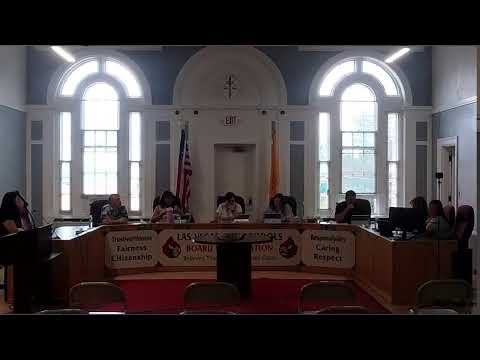
Las Vegas City Public Schools outlined a four‑pillar roadmap designed to raise student achievement and tighten the district’s career‑training focus. A presenter in the recorded presentation said the plan combines measurable proficiency targets with structural changes meant to steer resources to high‑demand local jobs.
The presentation named four specific pillars. The first sets a goal of boosting reading and math proficiency by 20%. The presenter described that target as the district’s primary metric for measuring progress on academic outcomes.
The second pillar requires “formal, tracked 4 year plans for every high schooler starting in 9th grade,” the presenter said. Those plans are presented as personalized safety nets meant to reduce the number of students who fall behind to the point of not graduating.
The third pillar expands career awareness at younger ages: elementary students would receive interactive career‑awareness events and middle school students would participate in hands‑on STEM and trade modules. The presenter framed early exposure as a way for students to discover interests before locking in high‑school schedules.
Under the fourth pillar, the district would enforce a stricter approval standard for new high‑school career courses. "No new pathway can be added unless it exclusively matches a reachable workforce demand," the presenter said, a change described as intended to ensure district resources train students for local jobs in demonstrable demand.
The presenter also said major curricular or programmatic changes will require structured parent and stakeholder input forms before proceeding, which the presentation characterized as part of a broader effort to increase transparency and trust.
The presentation did not specify implementation timelines, budget sources or the administrative steps needed to enforce the new pathway restriction. Officials did not provide vote counts or formal board actions in the recorded material; the content was presented as a roadmap rather than as an enacted policy.