Get Full Government Meeting Transcripts, Videos, & Alerts Forever!
Get email alerts on the Homeless Shelter Ordinance topic
No spam. Unsubscribe anytime.
Planning board forwards amended homeless-shelter and public-camping ordinance after debate over vetting, setbacks and enforcement
Summary
At a workshop, the Scavenging Planning Board amended a draft homeless-shelter and public-camping ordinance to tie enforcement to available shelter space, add variance language for separation distances, and rework provisions on staff vetting; the board voted to send the changes to the Select Board for review.
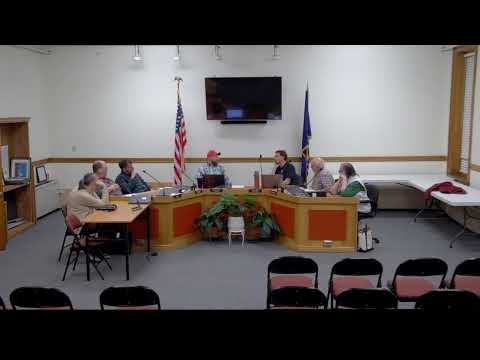
The Scavenging Planning Board on Tuesday advanced an amended homeless-shelter and public‑camping ordinance and voted to forward the revised draft to the Select Board for consideration.
The board’s staff member said recent case law — citing a 2024 Grants Pass decision — limits municipal authority to criminalize sleeping in public when "adequate shelter alternatives" are not available, and recommended revising enforcement language so bans would apply only when shelter space exists. "Municipalities cannot criminalize sleeping in public if there's no adequate shelter alternatives," the staff member said.
Board members debated multiple operational sections. Committee members raised objections to a broad definition of "municipal property" that would include parks, sidewalks and parking areas and questioned a proposed 1,000-foot separation from schools and from other licensed shelters. One committee member asked why a proposed setback would bar a shelter near other facilities and whether that would effectively prohibit shelters in practical terms.
The code enforcement officer explained that many technical standards in the draft — maximum-occupancy, life-safety planning, and sanitary fixtures — are grounded in building and NFPA codes and would be applied through standard occupancy inspections. "The maximum occupancy is determined by the code-enforcement officer based on building and life-safety codes," the officer said.
Members also discussed operational requirements: a pest-management plan and monthly inspections were recommended for higher‑turnover sites to limit cross-site infestations such as bed bugs; staff said similar inspection regimes exist in other residential and institutional settings and that inspection reports could be submitted to the town for follow-up.
A major point of contention was staff and volunteer vetting. Several board members and residents said they supported background checks and staff certifications, while others objected to language that made the police department the primary reviewer and potentially the arbiter of hiring decisions. One committee member warned that making the police department responsible for reviewing personnel information could expose the town to subjective decisions and liability.
To address those concerns, the board agreed to strike or rework the provision that would make the police department the routine personnel reviewer, require shelters to document that background checks have been completed at the operator’s expense, and preserve an option for the board or town to request documentation or for law-enforcement review in specific safety concerns. The board also agreed to add variance language allowing the planning board to reduce separation distances on a finding that a proposed use would not adversely affect public health.
After those edits — making enforcement contingent on available shelter space, adding a variance path for setbacks, and clarifying vetting responsibilities — the board voted to pass the amended ordinance to the Select Board for further review and possible placement on a future agenda. The vote was taken by raised hands; no roll-call tally was recorded in the transcript.
The Select Board will receive the planning-board comments and the amended draft for its consideration; the planning board emphasized these changes are intended to balance public safety, legal constraints from recent court decisions, and practical siting needs for shelters.