Get Full Government Meeting Transcripts, Videos, & Alerts Forever!
Get email alerts on the Housing topic
No spam. Unsubscribe anytime.
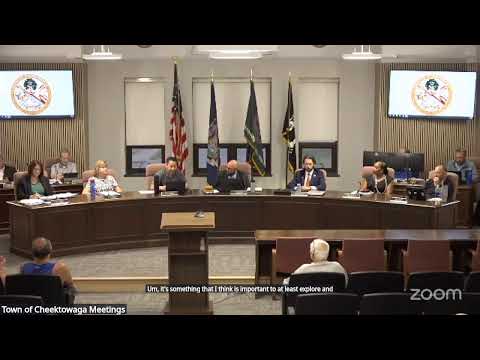
Town schedules public hearing on 'good cause' eviction law after extended debate
Summary
The town board set a July 28 public hearing on a proposed local 'good cause' eviction law after sponsors described it as a proactive tenant-protection measure and other members and residents raised questions about landlord protections, tax impacts and exemptions.
The Town of Cheektowaga board voted to schedule a public hearing on July 28 for a proposed local law (intro number 6 of 2026) that would adopt a 'good cause' eviction framework consistent with multiple New York municipalities.
Sponsor (council member) framed the measure as proactive: the local-law language would give tenants protection from no‑cause displacement and limit rent increases to specified caps (generally CPI-plus or set percentage caps unless statutory exceptions apply). “We’ve talked about this on and off for months… I see it as an opportunity to give tenants better protections to stay in their homes,” the sponsor said in opening remarks.
Why it matters: The proposal would change local eviction standards and limit allowable rent increases in certain circumstances, affecting landlords, tenants and the town’s housing market.
Board members and residents engaged in detailed questioning about scope and safeguards. One council member asked whether the town had documented local prevalence of abusive rent increases; another raised concerns about landlord protections in cases of failed rent payments, illegal occupancy or legitimate property-tax or utility cost increases. The sponsor and others pointed to state guidance from the Attorney General’s office explaining qualifying circumstances and exemptions — including failure to pay rent, lease violation, nuisance behavior, owner occupancy, or a landlord’s need to remove an apartment from rental use — that remain part of the draft’s carve-outs.
During public comment, tenants and tenant‑advocates urged the board to proceed, recounting instances they said fit the law’s purpose (long‑term tenants subject to steep rent hikes at renewal). A landlord who spoke at the meeting said he supported the proposal. Opponents warned the board that the law could have unintended consequences for small landlords and asked for clarity on how tax increases and municipal assessments would be treated in the law’s exceptions.
The board’s action: After extended debate among council members and public commenters, the board moved the proposal to a formal public hearing on July 28 so residents can submit testimony. Sponsors said they will provide the board with links to state guidance and additional explanatory materials before the hearing.
What to watch: The July 28 hearing will be the official opportunity for written and oral testimony. Staff and sponsors said they will circulate Attorney General materials and examples of operational exemptions (tax/utility increases, capital improvements) to clarify how landlord burdens and tenant protections are balanced.