Get Full Government Meeting Transcripts, Videos, & Alerts Forever!
Get email alerts on the Pipeline Mitigation topic
No spam. Unsubscribe anytime.
Pipeline operator moves AC‑mitigation out of mapped wetland; commission grants extension
Summary
An AECOM engineer said AC‑mitigation design changes kept direct work out of a mapped wetland; the Inland Wetlands Commission accepted an extension to review updated plans and the applicant agreed to provide written confirmation.
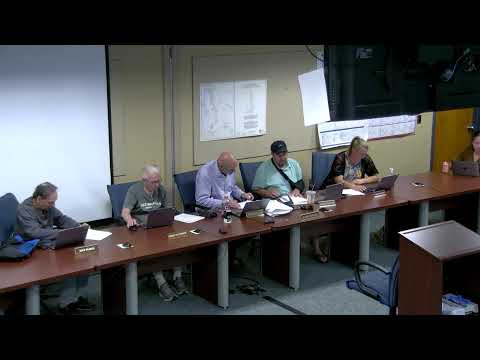
Connor Makepeace, an engineer with AECOM representing Iroquois Energy, told the Inland Wetlands Commission on July 13 that changes to the Diana Drive AC‑mitigation design remove a previously planned mitigation tie‑in from a mapped wetland to avoid direct impacts.
Makepeace said the firm added more detail about dewatering procedures (to be used only if needed), enhanced sediment and erosion control details, and a planting plan. He told commissioners the project timeline was pushed back to spring and that the team had mapped approximately six trees potentially affected along the route; in a later exchange he listed “3 willows and 2 hickories” as tree types noted in the mapping.
The commission asked for more time to review the revised maps and for clarification of tree‑clearing counts and long‑term monitoring. Makepeace said the applicant would file either an electronic extension form or send an email and that he could also verbally agree to an extension during the meeting.
Commissioner Tom Keller moved to extend W263411 (Diana Drive) to the commission's next regularly scheduled meeting. The motion was seconded and carried on a roll call stated in the transcript as "Motion carries 5 to 0." Staff asked the applicant to follow up with written confirmation of the verbal extension.
Why it matters: the revised design reduces the risk of direct disturbance to federally or locally flagged wetland soils by relocating work outside the immediately flagged area, but commissioners requested clearer tree‑clearing counts and monitoring steps before final approval.
What comes next: the applicant will provide written confirmation of the extension and is expected to return with any additional clarifying materials for commission review at the next meeting.