Get Full Government Meeting Transcripts, Videos, & Alerts Forever!
Get email alerts on the Food Security topic
No spam. Unsubscribe anytime.
FAO economist: healthy diets now unaffordable for nearly 2.7 billion as costs jump 25%
Summary
FAO chief economist Massimo Torero told a UN briefing that the global cost of a healthy diet rose about 25% in five years to roughly $4.03 (PPP) per person per day, leaving an estimated 2.69 billion people unable to afford healthy food; he urged investment in post-farm value chains and repurposing subsidies toward nutrient-dense foods.
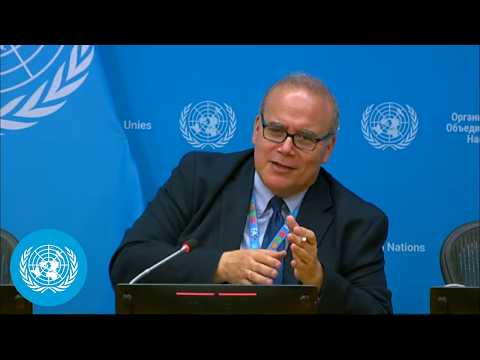
Massimo Torero, chief economist at the Food and Agriculture Organization, said at a United Nations press briefing that the global cost of a healthy diet has climbed roughly 25% in five years to about $4.03 (purchasing-power-parity) per person per day, and that an estimated 2,690,000,000 people — nearly one in three worldwide — cannot afford such a diet.
"The cost of a healthy diet is above the cost of the level of extreme poverty," Torero said, citing the $3 PPP-per-day extreme poverty line. He said the report distinguishes cost (what foods cost), affordability (linked to income), and consumption (behavior), and that the SOFI 2026 thematic analysis focuses on cost drivers.
The report, Torero said, finds that calories and nutrition are priced differently: staple foods supply roughly half of caloric needs while accounting for only about 13% of the cost of a healthy diet; fruits and vegetables provide roughly 5% of calories but about 16% of cost, and animal-source foods account for nearly 30% of the cost. "Calories are relatively inexpensive, but nutrition is not," he said.
Torero identified the main cost drivers as largely post-farm: about 70–75% of the cost of a healthy diet is generated after food leaves the farm — in storage, transport, processing and wholesale markets. "The biggest bottlenecks are no longer only on the farm," he said. "Investing in rural roads, cold storage, logistics and efficient value chains for fruits and vegetables generates much larger reductions in the cost of healthy diets than broad untargeted investments."
The FAO analysis also shows substantial regional differences and savings from using locally available foods: switching to locally appropriate diets reduces the cost of a healthy diet by an average 34% globally and by nearly 80% in Africa compared with a standardized global food basket, Torero said.
On policy, Torero said the report's simulations indicate that continuing to subsidize calorie-dense staple cereals alone can increase the relative cost of healthy diets. "Subsidizing staple foods alone can actually increase the relative cost of a healthy diet," he said, arguing for an agenda that repurposes support toward nutrient-dense foods and combines infrastructure ('hardware') with policy reforms ('software').
During questions, reporters pressed Torero on related risks. Pamela Falk of US News and World Report asked whether foodborne outbreaks — for example, cyclospora affecting leafy greens — would change the food-security picture or require an addendum. Torero replied that pests and diseases affecting high-value commodities are included in FAO modeling of potential global impacts and stressed the need to manage transboundary risk locally to avoid wider spread.
Asked where healthy diets are least affordable, Torero singled out Latin America and the Caribbean, especially the Caribbean, as regions with the highest costs despite being major food exporters. He said that export focus, inadequate sequencing of production for domestic markets and limited use of diverse local varieties can raise local prices.
On the wider geopolitical picture, Torero warned that disruptions linked to the Strait of Hormuz — and related reductions in inputs such as natural gas and sulfur used in fertilizer production — can choke supply and push input prices higher. Those input shocks, he said, typically transmit to food prices with a lag of several months and can force farmers either to reduce input use (cutting yields) or to switch crops, which creates longer-term risks for supply and higher prices for consumers. FAO simulations through 2030, Torero said, show possible global welfare losses around 1.7% and reductions in economic growth of up to 2.7 percentage points in some scenarios.
Torero also cited FAO work estimating roughly $11 trillion in hidden costs from dairy food systems, about $8 trillion of which relate to health (noncommunicable diseases), underscoring the report’s point that poor diets increase future health burdens.
The SOFI 2026 report will be formally launched in Rome on July 21; Torero said the FAO will make the report and supporting analyses available on its website. He emphasized targeted interventions — subsidized retail access for needy households, reducing food loss and waste, and investments in localized cold chains and urban–rural connectivity — as practical measures to lower the cost of nutritious foods.
The briefing concluded with the FAO offering additional data and simulation papers on its website and an invitation to the Rome launch.