Get Full Government Meeting Transcripts, Videos, & Alerts Forever!
Get email alerts on the School Governance topic
No spam. Unsubscribe anytime.
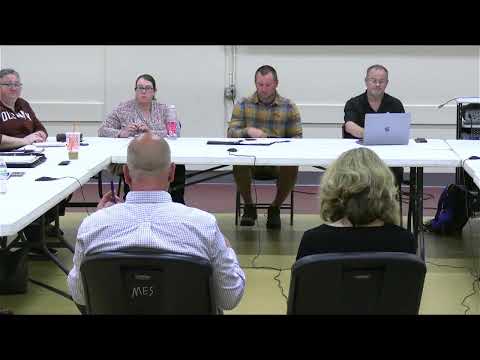
NHSBA trainer tells SAU 13 boards to focus on governance, policy updates and community outreach
Summary
Barrett, executive director of the New Hampshire School Board Association, told SAU 13 school board members that boards should prioritize governance (policy, budgets, strategic planning), hold regular superintendent check-ins and use multiple communication channels; NHSBA offered policy templates and follow-up support.
Barrett, executive director of the New Hampshire School Board Association, told the SAU 13 Joint School Board and its three member boards that their primary role is governance — setting policy, proposing budgets to voters and planning strategically — while day-to-day management belongs to the superintendent.
"The board can only act collectively," Barrett said, emphasizing that no individual board member or chair may take action on behalf of the board without delegated authority. He reviewed three core principles: the board’s duty to provide education under RSA 1:89, the need for collective authority at duly called meetings, and the distinction between governance and management.
Barrett walked members through policy requirements tied to the state’s minimum standards (ED 306), noting that the number of required policies has grown and urging boards to use NHSBA model templates. He advised the policy committee to prioritize any policies that must be in place by the start of the school year and said NHSBA staff attorneys draft model language for districts to adapt. "The school board's job is not to run the schools, but rather to see that they are run well," Barrett said.
On oversight and transparency, Barrett recommended regular audits, posting audit results online, and considering small finance committees to prepare budget questions ahead of meetings. He also urged regular superintendent check-ins — for example, informal reviews in the first month and periodic progress discussions before formal evaluation — and reminded members that annual superintendent evaluation is required by law.
Barrett highlighted communications tactics to reach diverse constituencies (parents, elderly voters, community groups) including farmer’s market booths, coffee hours and targeted outreach. He also reviewed complaint protocols: policy KE for operational complaints and KEB for staff- or student-related complaints, with many matters to be handled first by the superintendent or appropriate administrator.
NHSBA offered follow-up support, model policies (including sample materials for AI and drone topics), and an offer to meet individually with boards that want extended training. Barrett provided contact information and encouraged boards to reach out to NHSBA staff for templates or legal clarification.