Get Full Government Meeting Transcripts, Videos, & Alerts Forever!
Get email alerts on the Technology Cybersecurity topic
No spam. Unsubscribe anytime.
Monomoy tech director outlines cybersecurity push and upcoming MFA requirement for committee accounts
Summary
Mackenzie Yarlets, Monomoy's director of technology, told the school committee the district is focusing on device refreshes, infrastructure improvements, multilingual communications and layered cybersecurity measures, and said the committee's Google accounts will soon be required to enroll in multi-factor authentication.
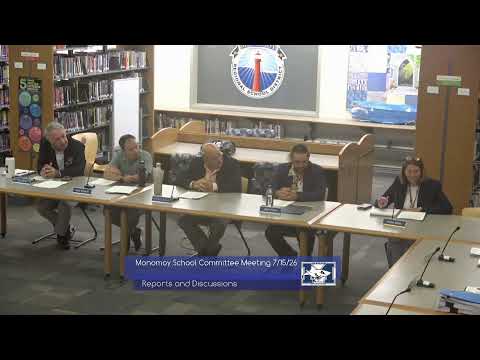
Mackenzie Yarlets, the district's director of technology, told the Monomoy Regional School Committee that her small team is focused on keeping devices and systems current and improving security to protect student and staff data.
Yarlets summarized the department’s work in four main areas — devices, operations and systems, connectivity, and privacy and security — and said much of the technical work happens over the summer, when the team refreshes devices and applies security patches. “We’re a support structure in general for technology in the building,” Yarlets said. “There’s so many different things… thousands and thousands and thousands of devices.”
Why it matters: School districts hold a large volume of personal and operational data that are attractive targets for cybercriminals. Yarlets described a layered strategy of prevention, monitoring and rapid response intended to reduce disruption and preserve access to instructional systems.
Yarlets said the district recently adopted Incident IQ to centralize IT and facilities tickets and asset management, and pointed to the district communication tool Reach My Teach as a major operational improvement. “I checked the numbers today actually and there were 226,000 communications this school year through Reach My Teach,” she said, and added that popular translated languages on the platform include Spanish, Portuguese and Haitian Creole.
On cybersecurity, Yarlets said the district runs mock phishing campaigns, enforces tighter user permissions, maintains immutable off-site backups, and has an incident-response playbook in place. She described multi-factor authentication as a particularly effective control: “That second layer can actually block more than 99% of compromise attempts on your account if they get your password,” Yarlets said.
Yarlets told the committee the technology office will require multi-factor authentication for committee Google accounts and expects to turn on the requirement soon; committee members will receive an enrollment prompt and instructions. She also said staff complete mandated annual cybersecurity training with periodic refreshers and that phishing exercises usually run about quarterly.
The director invited committee members to contact her for one-on-one help with enrollment and setup and said the district will continue work on device refresh cycles and operational simplification to lower support burdens.
The presentation was followed by questions from committee members about training cadence and threat trends and by a public comment praising the Reach My Teach system. Yarlets closed by offering to provide assistance to any member who needs help with multi-factor authentication.