Get Full Government Meeting Transcripts, Videos, & Alerts Forever!
Get email alerts on the Municipal Governance topic
No spam. Unsubscribe anytime.
West Miami commission approves parkway rules, employee health program and $200,000 bus; sets millage at 5.77 mills
Summary
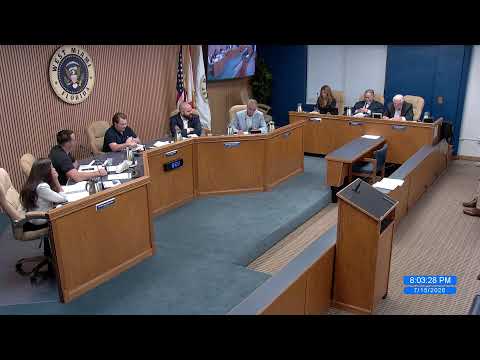
At its July 15 meeting the West Miami City Commission adopted new parkway (swale) regulations, authorized a SIMR employee health reimbursement program, approved a $200,000 bus purchase, set the proposed millage rate at 5.77 mills and advanced several ordinances to second reading.
The West Miami City Commission on July 15 adopted a package of measures affecting parkside landscaping, employee benefits and city services and set the city—s fiscal procedural calendar.
The commission unanimously approved new parkway (swale) improvement rules that allow permeable materials for parking in public right‑of‑way where appropriate, require permits and a recorded hold‑harmless covenant, and give the city authority to revoke permission if needed. Commissioners added an exclusion for streets with curbs (including Southwest 16th Street and 62nd Avenue) and added a covenant provision clarifying a 36‑hour standing‑water evaluation for enforcement.
The commission also authorized the city manager to negotiate and execute agreements to implement a self‑insured medical expense reimbursement (SIMR) program managed by EHP with Revive providing telehealth and prescription services. Presenter Daniel Biggs said the program "pays you to participate and reduces health care costs" and described FICA tax savings for the employer and no‑copay telehealth and prescription access for participating employees. Commissioners asked for complaint and vendor oversight clauses; staff said the partnership agreement would include opt‑out provisions and contractual remedies.
In other action, the commission approved a $200,000 purchase of a 2025 32‑seat municipal bus to replace the city—s failing 1997 vehicle and authorized finance terms (staff reported a five‑year loan at about $3,960 per month). The commission also set the proposed maximum millage rate for FY 2026–27 at 5.77 mills and authorized required public‑hearing notices.
The commission advanced several items to second reading and scheduled public hearings: a modernized certificate‑of‑use ordinance and a mobile food‑service (food truck) ordinance. It also approved an ordinance designating the West Miami Recreation Center as the city—s official polling place and approved changes to the city—s board appointment procedures.
On land use, commissioners approved on first reading a waiver of plat application for 6051 Southwest 15th Street to subdivide a 12,000‑square‑foot lot into two standard 60x100 R‑1 lots for single‑story houses; the applicant and staff said plans comply with setbacks and landscape requirements and the applicant agreed to covenant the approval to submitted site plans ahead of second reading.
The meeting closed with routine housekeeping items, scheduling adjustments for August hearings and commissioners— remarks recognizing volunteers and recent community events.
Votes at a glance - Parkway improvement ordinance (2nd reading, as amended): approved 5‑0. - SIMR/EHP Revive program resolution (authorization to negotiate/execute agreements): approved (voice vote). - Bus purchase authorization ($200,000; 5‑yr financing): approved (voice vote). - Millage rate resolution (proposed maximum 5.77 mills): approved (voice vote). - Waiver of plat for 6051 SW 15th St (1st reading ordinance): approved 5‑0; covenant to site plan to be added before 2nd reading. - Recreation Center polling place ordinance (2nd reading): approved 5‑0. - Board appointments ordinance (2nd reading, amended): approved 5‑0. - Certificate of use and mobile food vendor ordinances (1st readings): passed on first reading; second‑reading public hearings scheduled.
What happens next: most ordinances move to second reading/public hearing in August; staff will bring the audit‑selection committee appointments and the covenant language for items tied to site plans or administrative conditions.