Get Full Government Meeting Transcripts, Videos, & Alerts Forever!
Get email alerts on the Elections topic
No spam. Unsubscribe anytime.
Ohio elections director: observer appointments are submitted about 11 days before Election Day
Summary
During a House Administration Committee exchange on preparing House election observers, a committee member asked how observers should prepare for deployment to Florida. Director Reed said Ohio requires appointment lists roughly 11 days before Election Day and described compiling credentials for polling locations.
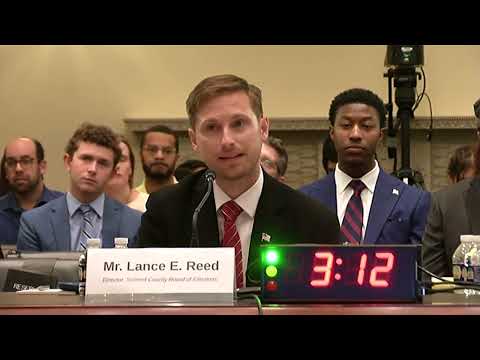
A committee member at a House Administration Committee hearing asked how federal "house" election observers should prepare for deployment to Florida, and Director Reed of Ohio elections described Ohio’s practice of requiring appointment lists roughly 11 days before Election Day.
The committee member said Georgia law "requires poll watchers to complete training and establishes clear standards for governing their conduct," and urged that Congress seek input from state and local election officials when drafting a federal framework for observers. The member then asked Mister Wilcox what observers should do to prepare. Mister Wilcox replied, "they contact the election authority in that jurisdiction and let the election authority tell them the proper thing to do at that authority," stressing that state rules differ and that early contact with the local election administrator is "extremely important."
The committee member next asked Director Reed to "walk us through Ohio's election observer regulation and procedures." Reed said that observers are typically appointed by the state or county political parties, candidates or ballot-issue committees, and that those appointing committees submit lists of appointees to the elections office. "Depending on the type of observation they're gonna do roughly 11 days before Election Day, for instance, or 11 days before early voting starts," Reed said, explaining that that deadline allows the office to credential observers before they arrive.
Reed described how the office compiles appointment lists into a single roster and provides that roster to polling locations so precinct election officials and booth workers know who is authorized to be present. Reed said that if someone shows up who is not on the compiled list, precinct officials can contact the elections office to confirm whether the person should be allowed to observe.
When asked whether Ohio has seen an increase in observers, Reed said there has been an uptick in interest but "we haven't seen an uptick in actual, execution on it yet." The exchange closed after the committee member thanked both witnesses and yielded back.
The hearing provided procedural context for federal lawmakers considering a House observer framework and underscored two practical points offered by state officials: coordinate early with the local election authority, and ensure credential lists are compiled and distributed to polling places in advance so precinct officials can verify observers on site.