Get Full Government Meeting Transcripts, Videos, & Alerts Forever!
Get email alerts on the Economic Development topic
No spam. Unsubscribe anytime.
Easly City advances annexations and incentive package for proposed Target amid traffic and eminent-domain concerns
Summary
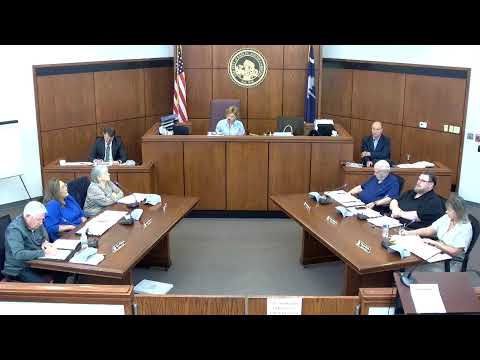
Easly City Council advanced a cluster of annexations, rezonings and an incentive agreement connected to a proposed Target store after lengthy public comment and debate over traffic, single-access design and a clause referencing eminent domain and FOIA notice to developers.
Easly City Council on Monday voted to advance several annexations, rezonings and an incentive agreement related to a proposed Target store at the intersection of Highway 123 and nearby commercial parcels, despite public opposition about traffic and a provision in the incentive package that references eminent domain.
The council advanced Ordinances 20-26-22 and 20-26-23 to annex roughly 12.014 and 3.813 acres, respectively, designate the parcels general commercial and move them toward final approval. They also approved Ordinance 20-26-24 to rezone about 17.05 acres from residential to general commercial and Ordinance 20-26-25 to approve an incentive agreement with R.T. Calhoun Memorial LLC; all items were advanced on voice vote for a subsequent reading.
Developers and Target representatives presented engineering and traffic plans that, they said, were coordinated with the state Department of Transportation. Will Rogan of Sypris Engineering described mitigation measures including dual left-turn storage lanes of 675 feet each and raised medians intended to reduce conflict points. "That’s four and a half times what exists today," he said describing planned turn-lane storage to improve ingress to the site.
Woody Axelson of Armada Development said the group had completed traffic studies, engaged DOT and negotiated with neighboring property owners, but acknowledged that not every adjacent owner had reached agreement. "We have 4 of the 5 required consents," Axelson said, adding that the team had revised plans and continued outreach.
Chris Lundy, Target’s real estate director, said the retailer planned a roughly 140,000-square-foot prototype store and highlighted Target’s community investments and hiring. "We would purchase the property and build a new 140,000 square foot prototype store," Lundy said, and said Target would first open a store to understand traffic patterns before additional site build-out.
Opponents in public comment and on council focused on access and the use of public incentives. Angela Jordan, a resident, told council that the incentive contract "reads, quote, ‘The city will consider exercising this power of eminent domain,’" and called the item a "hidden agenda" and "pure greed." Other speakers and one council member noted that the planning commission recommended denial 3–1, citing the number of entrances and safety concerns.
Several council members also raised concerns about using public funds to benefit a private corporation and the language in the incentive agreement that addresses FOIA disclosures. One council member warned that the FOIA-related provision could give developers advance notice of records requests; another said the FOIA language could and should be revised as negotiations continue.
City staff presented preliminary fiscal estimates tied to the development, including roughly $364,000 in one-time impact and permit fees expected at project start and an estimated $200,000 annually from business license fees, local option sales tax and property tax related to a single Target store. Staff said loan repayment for a city road expense tied to the project could be covered by recovered fees in about nine to ten years.
Council members who favored advancing the measures argued the project would generate jobs, recurring revenue and catalytic development that could draw shoppers to Easly City. Members who opposed the measures highlighted traffic, single-access design and property-rights concerns and said they expected a vigorous public debate in the month before the next reading.
The council paused final action and advanced the ordinances to allow a month for additional public input and staff follow-up on traffic, financial assumptions and incentive language. The council also asked staff and developers to continue negotiating and to return with clarified terms.
Next steps: the ordinances will return for additional readings, with staff and the developer expected to provide refined traffic, legal and fiscal details in the coming weeks.