Get Full Government Meeting Transcripts, Videos, & Alerts Forever!
Get email alerts on the Immigration Enforcement Policy topic
No spam. Unsubscribe anytime.
Oakland ad hoc panel forwards inspector general memo on OPD-ICE policy to city counsel for drafting
Summary
An Oakland Police Commission ad hoc committee voted to send an inspector general memorandum to city counsel to begin drafting changes to OPD’s immigration-enforcement policy after the OIG identified six gaps between OPD’s draft, SB 54 and peer-city practices. Community members urged stronger identification, reporting and on-the-ground guidance for officers.
The Oakland Police Commission ad hoc committee voted Wednesday to send an inspector general memorandum to city counsel and ask counsel to begin drafting policy language to address gaps the OIG found in the Oakland Police Department’s draft immigration-enforcement policy.
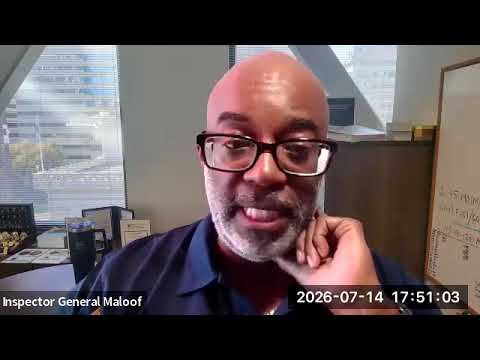
Inspector General Malouf told the ad hoc that the office compared OPD’s draft with California Senate Bill 54, the Trust Act and the Truth Act and policies from eight California cities, and identified six shortfalls. "We came up with six areas where the policy there are gaps between the policy and the state law and pure best practices," Malouf said, citing unclear definitions of judicial versus administrative warrants, no explicit ban on use of city facilities by ICE, unclear limits on participation in federal task forces, sparse guidance for responding to DHS or ICE requests (including traffic control), missing mandatory reporting guidance to the California Department of Justice, and incomplete limits on sharing personal data and technology such as license-plate readers and facial recognition.
Malouf also flagged drafting errors that need correction, including a misnaming of the federal department and an incorrect penal-code citation, and said some suggestions from Council Member Wong and a police-accountability coalition were incorporated into the memorandum.
Chair Griot framed the motion as a first step to get counsel working on language rather than adopting a final policy. "The motion contemplates that our counsel starts drafting language for incorporation into the immigration policy based on the inspector general’s report," Griot said. The ad hoc seconded the motion and adopted it by voice vote; the chair said members agreed it would return to the ad hoc for further consideration before any policy is finalized.
Community members who spoke urged stronger operational guidance for officers. Millie Cleveland told the panel, "people are scared and people are being snatched by ICE," and asked that OPD require officers to verify federal agents’ identification and to document interactions, including by recording or photographing detainees. Anne Jenks urged the ad hoc to "consider the broadest possible definition, even beyond DHS," saying federal agents and other law-enforcement personnel can be used interchangeably in practice.
Commissioners debated legal and political risks of drafting language that could be read as authorizing interference with federal officers. Griot cautioned against wording that would put OPD officers in a position of choosing between local policy and federal law or invite federal retaliation, while also insisting officers must still document crimes they observe.
OPD representatives on the call said the department had drawn on existing administrative instructions and sanctuary-city policies rather than restating them in full, and that several of the IG’s clarifications (for example, a clearer explanation of judicial versus administrative warrants) would be straightforward to add. An OPD officer, Jason, said his office would circulate a Los Angeles County Sheriff’s Department directive as a possible model and recommended consistent activation of body-worn cameras during interagency interactions.
The ad hoc’s action is procedural: it directs the inspector general’s memo to counsel and asks counsel to begin drafting suggested language; commissioners said the draft will come back to the ad hoc and the public for additional input. The committee scheduled follow-up work and an additional meeting to continue the discussion.
What’s next: Counsel will begin drafting policy language based on the IG memo and the ad hoc’s direction; the draft will return to the ad hoc and ultimately to the Police Commission for further consideration.