Get Full Government Meeting Transcripts, Videos, & Alerts Forever!
Get email alerts on the Emerald Ash Borer topic
No spam. Unsubscribe anytime.
City staff confirms Emerald Ash Borer in Hutchinson; removal plan targets infected boulevard trees
Summary
City staff told the Hutchinson City Council that Emerald Ash Borer was recently confirmed near the Highway 7 corridor; 12 boulevard trees are infected, about 325 boulevard trees remain in the municipal inventory, and staff outlined a multi-year removal plan and resources for private-property owners.
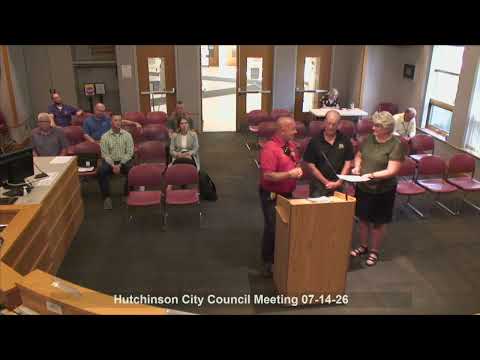
City staff told the Hutchinson City Council on July 14 that Emerald Ash Borer (EAB) has been positively identified in the city along the Highway 7 corridor and that the city will continue an established removal plan for public trees.
The staff presentation said traps first identified EAB recently and that 12 boulevard trees are currently infected. Staff estimated about 325 boulevard trees remain in the city inventory and said the broader private-tree population includes roughly 5,000 ash trees on private property. “We haven't seen a great spread from that neighborhood at this point yet, but we know it's here now and we'll probably be moving even a little bit quicker,” staff said.
Why it matters: EAB typically shows visible decline over several years; staff noted a roughly five-year mortality curve with two years before symptoms become obvious. The city’s plan prioritizes removal of infected boulevard trees to avoid public hazards and to slow the spread where possible. Staff said they have funding reserved for removals and are prepared to accelerate work if needed.
City staff described steps for residents: monitor the city's web resources, request a city inspection through the online request system or by phone, consider treatment options (which can extend a tree’s life but require recurring application), and discuss vetted local contractors as needed. “Treatment is pretty effective,” staff said, but added it can be costly over time and may not be feasible for all sites.
The council asked about private-property trees and capacity. Staff said the city cannot remove or treat private trees without owner permission but will provide information, resources and possible vetted contractor lists; private properties are likely to be handled over time through resident action or separate programs. The council emphasized tracking and public communication; staff said most boulevard trees are mapped, which will help targeting removals.
Next steps: staff will continue to monitor traps, remove confirmed infected boulevard trees per the two- to five-year disease timeline, and post updated guidance and resources on the city's website. No policy change or new ordinance was adopted at the meeting.