Get Full Government Meeting Transcripts, Videos, & Alerts Forever!
Get email alerts on the Audit And Finance topic
No spam. Unsubscribe anytime.
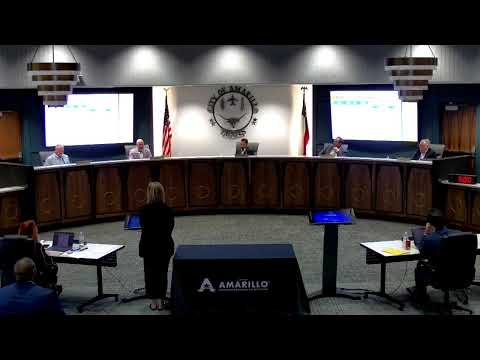
Amarillo mayor pushes for forensic audit as council directs audit committee to vet firms
Summary
Mayor Cole Stanley urged a third-party forensic audit after staff and auditors produced inconsistent figures for CIP, sewer and ARPA accounts; council asked the audit committee to vet qualified forensic auditors and return recommendations and cost estimates in August.
Mayor Cole Stanley pressed AmarilloCity Council on the need for an independent forensic audit of selected financial areas, saying inconsistent reports and unexplained line items in recent audits left him unable to vouch for the citybooks. "We have told our public we have $43,000,000 so far identified in construction projects that have been closed out," Stanley said during the councilmeeting, arguing that an outside firm could verify stewardship and restore confidence.
The council spent more than two hours debating whether the city should commission a forensic audit focused on three categories mentioned in prior meetings: capital improvement program (CIP) projects, sewer and water accounts, and American Rescue Plan Act (ARPA) funds. Supporters framed the audit as a limited, fact-finding step to resolve discrepancies; opponents warned that a forensic review is usually triggered by credible evidence of fraud and could be costly. "To me, if there's evidence of misappropriation or fraud, that's what a forensic audit is designed for," a council member said, while Internal Audit noted it had not found indications that would, on its own, require a forensic engagement.
City internal audit and finance staff told the council they had not seen evidence of fraud in the areas named. The internal auditor said, "From what we've audited and what I've looked at, I have not seen anything of concern in those areas," adding that internal audit has autonomy to look into specific questions and could provide more targeted work if needed.
Council members and staff discussed how a forensic audit would be scoped and funded. An expert on cost estimated that firms commonly bill about $500 per hour for such work and that completing one area could take several weeks; the consultantestimate presented to council placed a single-area, short, focused review in the low hundreds of thousands of dollars depending on depth. Stanley and other supporters said the potential price tag should be weighed against the public value of certainty about public funds.
Rather than immediately commissioning an audit, the council directed the existing audit committee to vet qualified forensic audit firms, gather cost estimates and recommended scopes, and return to council with a formal recommendation. Council also asked that any recommendation include written facts or specific mismatches that the firm would be asked to investigate so the work is narrowly tailored. City staff said the audit committee could identify three reputable firms and report back; the council agreed to expect preliminary recommendations in August.
Members of the public urged prompt independent review during the public comment period, citing prior instances of misuse or misreporting that they said warranted outside scrutiny. Staff and several council members urged that the committee and any hired firm produce a defined scope and rationale before launching a costly, broad forensic engagement.
Next steps: the audit committee will solicit qualifications from forensic auditors, aim to present candidate firms and projected costs to council in August, and recommend a narrowly scoped engagement if warranted. No vote to hire an auditor was taken at the meeting.