Get Full Government Meeting Transcripts, Videos, & Alerts Forever!
Get email alerts on the Report Editing topic
No spam. Unsubscribe anytime.
Working group approves final venues report amid resident objections over Blanding’s turtles wording
Summary
The Venues Working Group on July 13 authorized co-chairs to issue a final report on facility consolidation and public-works siting after residents urged corrections to appendices, arguing a statement about Blanding’s turtles in appendix C1 is inaccurate and should be corrected or footnoted.
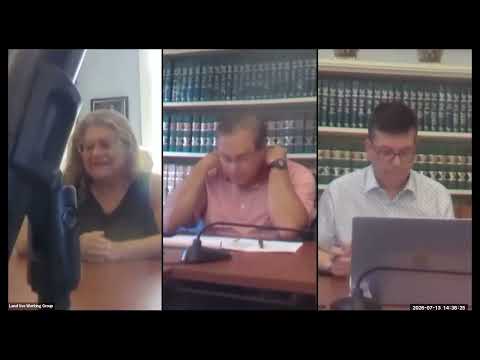
The Venues Working Group voted July 13 to authorize its co-chairs to issue a final report on municipal facility consolidation and public-works siting after members agreed to incorporate editing changes and clarifying footnotes raised by residents.
During the public-comment period, a resident who gave an address as 62 Press Dot Road in Concord asked the committee to make four corrections to the draft: add current agricultural production and special characteristics for a field in appendix C; delete a preamble in appendix E2 that the speaker said misrepresents public input; add an explanatory note to appendix C1 correcting an inaccurate statement about the recent introduction of an endangered species; and remove an obsolete diagram in section 4.2 that conflates alternatives. The resident said the changes would reduce confusion for readers and correct obsolete content.
An online commenter identified in the record as Brian Windmiller told the group that appendix C1 contains “misinformation” about Blanding’s turtles and pressed the committee to remove or correct the sentence rather than leave a correction buried in a lengthy appendix. “I’ve demonstrated through published, including a variety of published articles that Blanding’s turtles are known to have occurred on the site since at least 1854, and that they occur throughout the entirety of the site,” the commenter said, arguing the sentence as drafted amounted to disinformation unless amended.
The committee’s co-chairs responded that there was no intent to mislead and said they had tried to gather public input and correspondence in the appendices. The Chair said the group would discuss how best to reflect new information in the body text or by an explicit footnote so readers were not misled by phase‑1 language that has since changed.
Members then reviewed Version 6 of the draft report page by page. Debate centered on how prominently to present findings from the municipal consolidation subgroup: some members favored moving the consolidation recommendations into a lower-priority category or labeling them ‘additional recommendations,’ while others argued consolidation and long-range capital planning are tightly linked and should remain visible. The committee agreed to clarify ordering and wording so the final summary reflects both the subgroup’s findings and that some items are intended for longer-term study.
The group also discussed site-area figures and assumptions used in the draft. Participants cited preliminary estimates — for example, a marginal land-use estimate “about 1.5 to 2 acres” for a specific public-works need, and informal ranges of “7 to 10 acres” for portions of treatment plans — and asked staff to add clearer references and footnotes to explain how acreage and buffer areas were calculated.
On appendices, members agreed to remove or rework a preamble in appendix E2, add a clarifying footnote in appendix C1 noting that updated information was received after phase‑1 analysis, and ensure historic versus current site-status is made explicit in the record. Several members asked the co-chairs to ensure that these clarifications appear either in the main report text or as prominent annotations rather than being only included in long appendices.
A member moved to authorize the co-chairs to issue the final report reflecting the day’s deliberations and edits; the motion was seconded and carried on a roll-call vote recorded in the meeting minutes. The committee discussed scheduling and deadlines for finalizing the report; the Chair named Aug. 2 as a target date while other members referenced mid‑July dates (July 17/18) for some administrative steps, and members asked the co-chairs to circulate the final text promptly.
The group closed the meeting with thanks to staff and members and adjourned. The co-chairs will produce the final report incorporating the agreed clarifications and annotations and circulate it to the working group and select board according to the timeline discussed.